Cumbunga Creek Loop Trail
A 16 km loop from Blanchetown through Cumbunga Creek and the lagoons of Roonka Conservation Park — past ancient canoe trees, abundant birdlife and one of the most significant Aboriginal archaeological sites in Australia.
- Distance
- 16 km loop
- Difficulty
- Easy
- Trail type
- Loop
- From Adelaide
- 145 km north-east
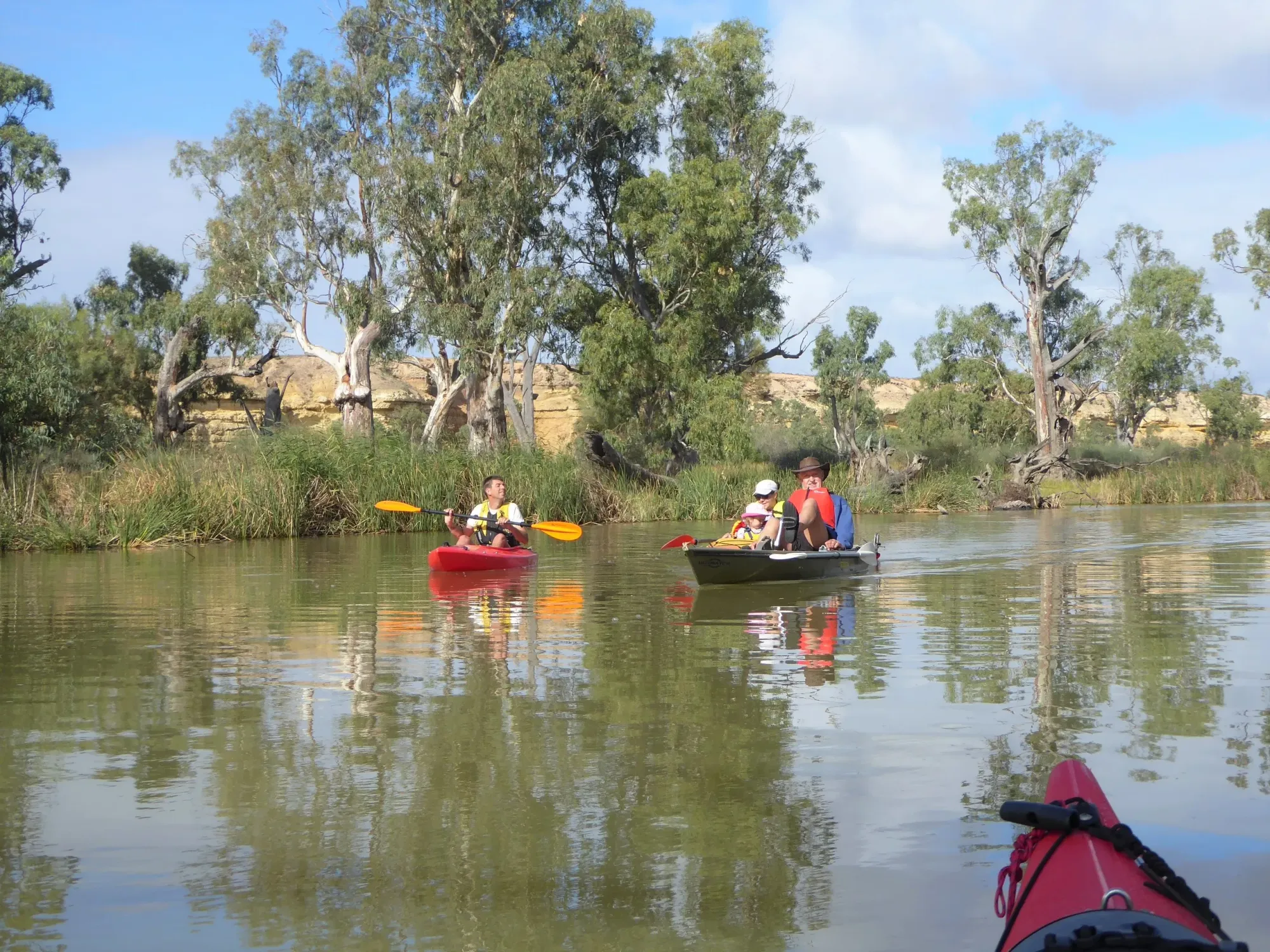
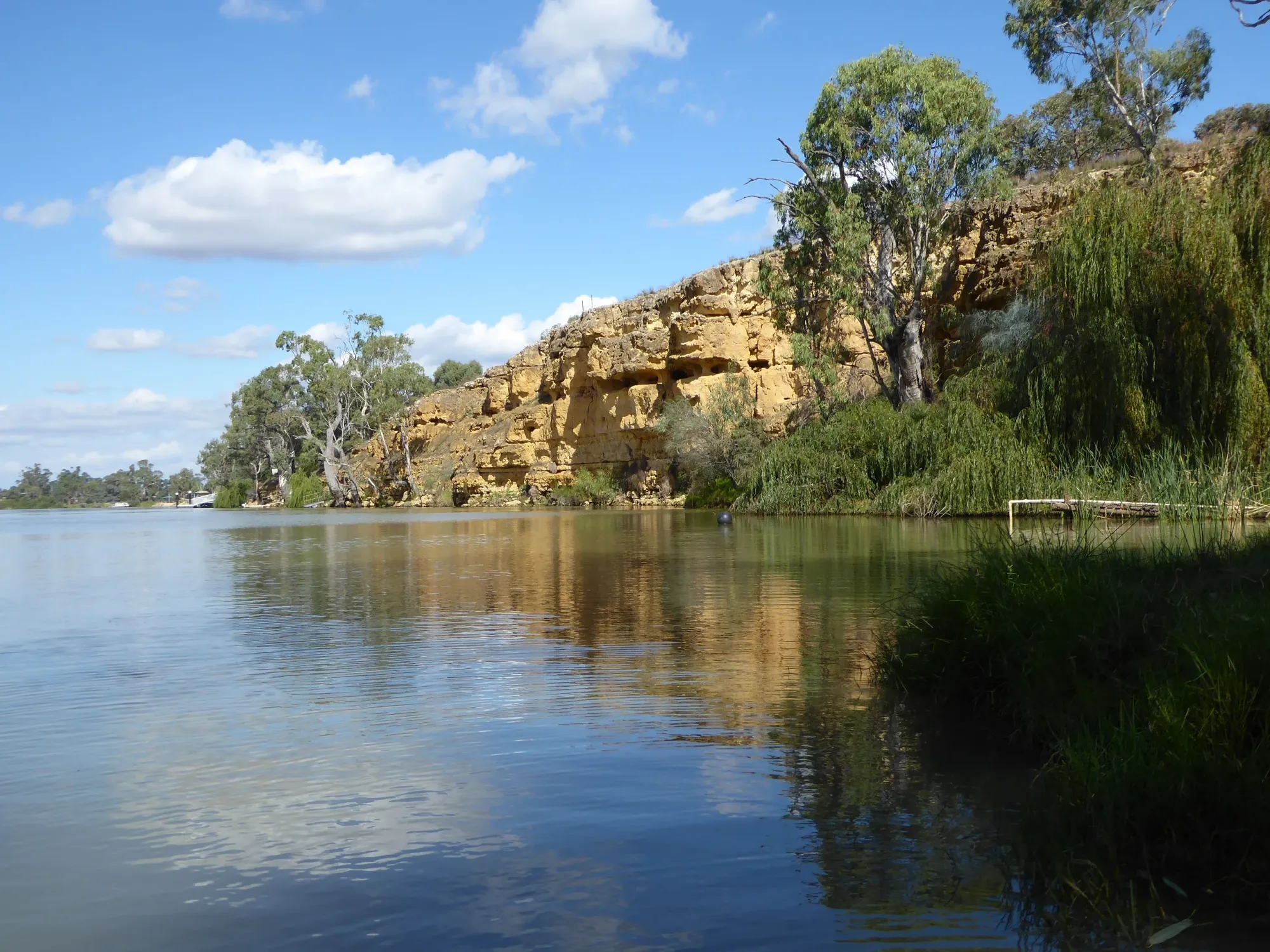
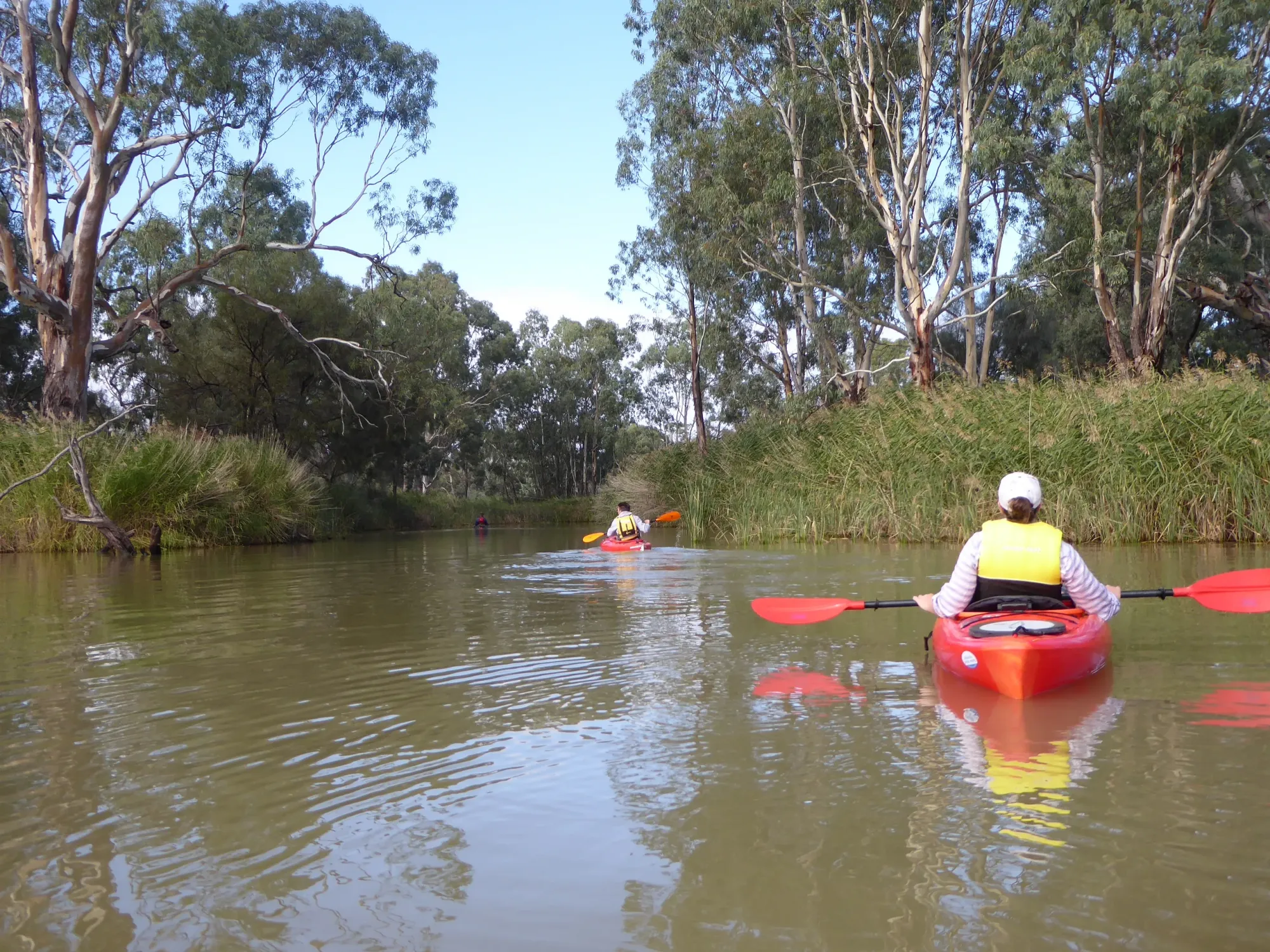
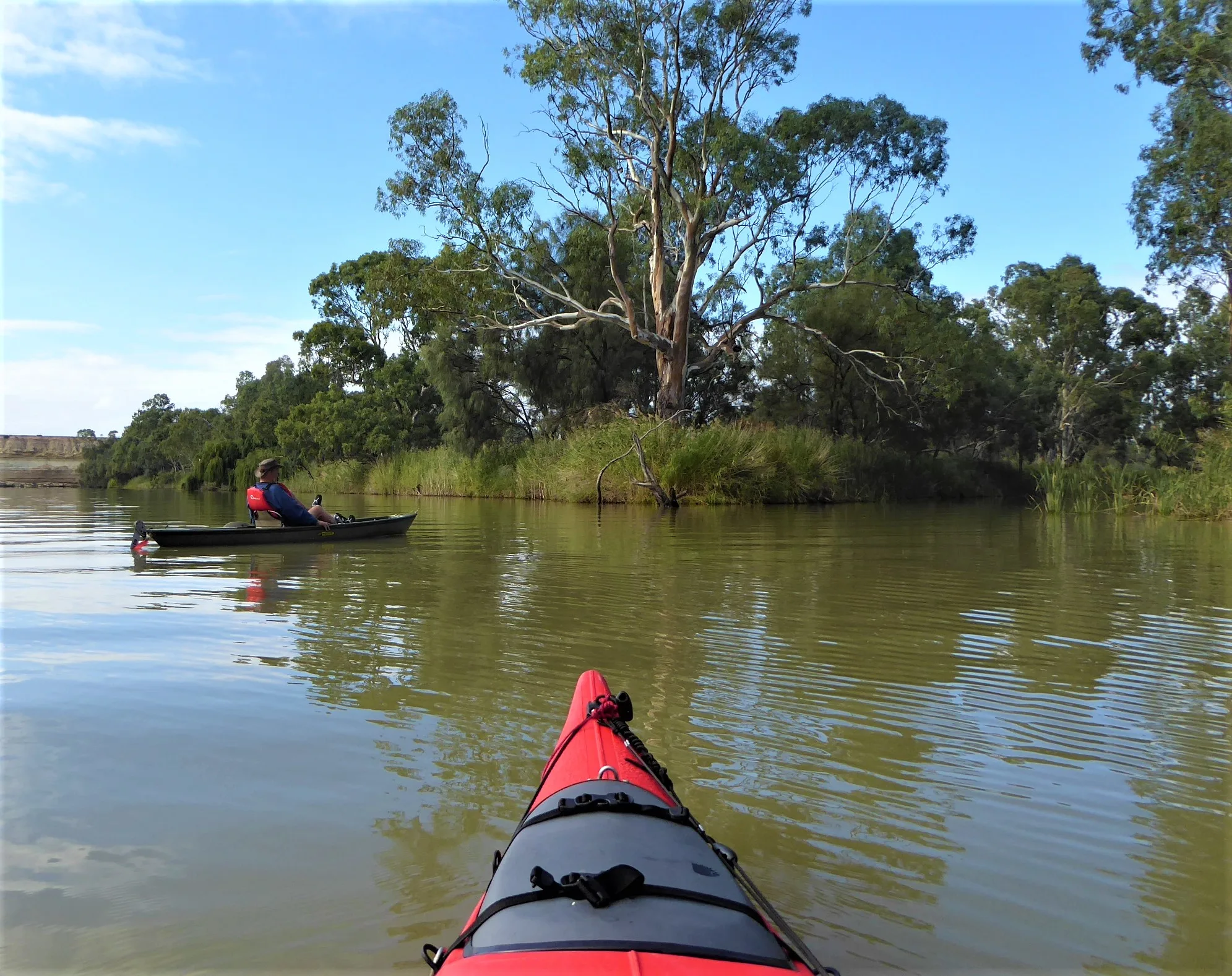
The Cumbunga Creek Loop is one of the most historically and ecologically rich half-day paddles on the Murray. Leaving from the Blanchetown boat ramp, the trail passes through a large lagoon, enters the quiet backwaters of Cumbunga Creek, and winds through Roonka Conservation Park — where the banks hold ancient canoe trees and the air is thick with birdlife. The loop takes paddlers past one of Australia’s most significant Aboriginal archaeological sites before returning along the Murray itself.
About This Trail
This is a loop trail starting and finishing at the Blanchetown Public Boat Ramp. The circuit can also be started from Lazy B landing at the northern end of the trail (short-term camping available). There is one easy portage across a roadway at the north end of the lagoon behind Julia Island — paddlers who prefer can skip this section and return directly along the Murray instead.
Bird life is abundant throughout the entire trail. The creek and lagoon sections are sheltered and calm; the Murray River sections may be busier during summer with motorised craft and water skiers near Blanchetown. Weather conditions can change quickly on the open river, so always check the forecast before setting out.

Paddle SA is the governing body of paddle sport and recreation in South Australia. It leads and supports paddling in South Australia and encourages the safe exploration of our waterways.
Paddling Trails South Australia has a range of trails to suit different abilities. Know your ability.
🌐 paddlesa.au →Launch Sites & Route
| Site | Location | Notes |
|---|---|---|
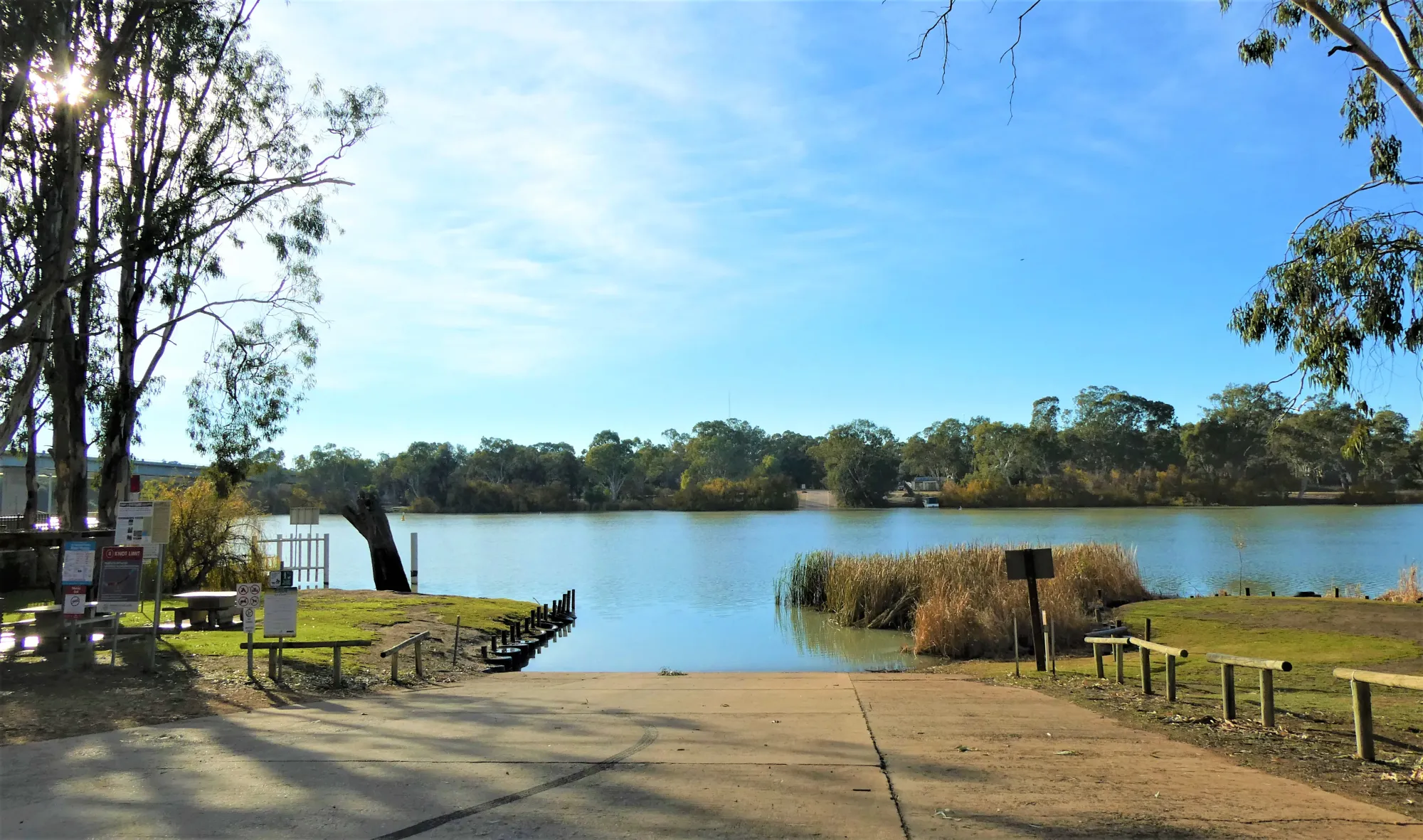
| Blanchetown Boat Ramp Southern launch | GPS: 34.3470 S; 139.6151 E Western (town) side of river, below the bridge | Drive past the Lock; ramp at end of road. Toilets on site. Limited parking. Access is through the town. |
| Lazy B Landing Northern launch / camp | Northern end of trail | Short-term camping permitted on Crown land adjacent to the Murray. No facilities. Limited parking. |
Route Description (from Blanchetown Boat Ramp)
From the Blanchetown Public Boat Ramp, set out keeping left among the dead trees. You will soon enter a large lagoon. Keep to the right-hand side of the lagoon and you will enter Cumbunga Creek approximately 4.2 km from the launch point.
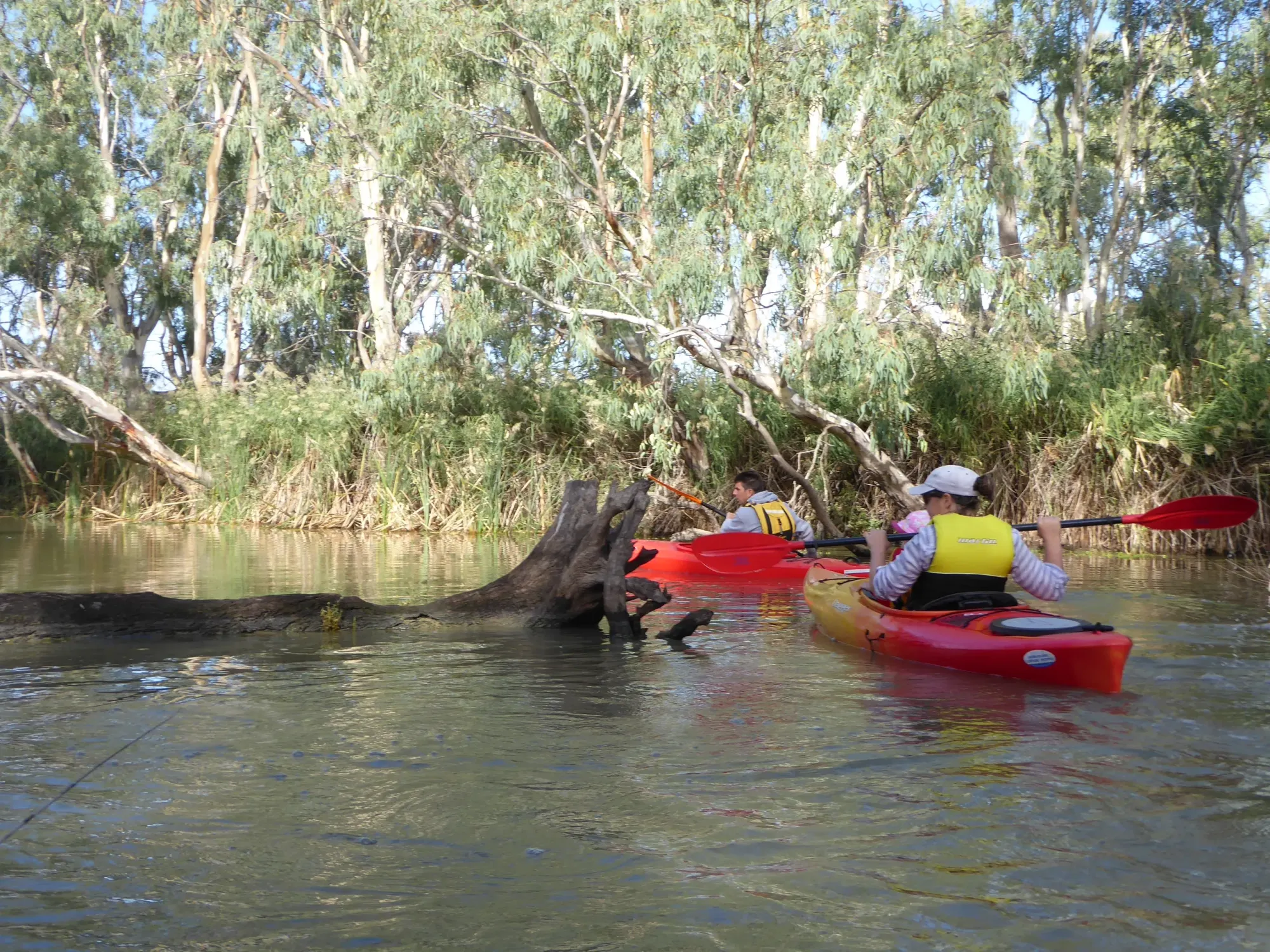
Soon after entering the creek, take care to avoid the overhead rope crossing the water — this rope is used to move a manually operated ferry that transports sheep between the banks. A number of canoe trees will be visible along the banks of the creek. The best example is on the right-hand side close to the river, not far past the ferry rope.
Cumbunga Creek widens as it enters Roonka Conservation Park. A wide entrance back to the Murray River will appear — do not take it. Instead, continue in the lagoon in a north-westerly direction until you spot a narrow creek going back to the river at GPS 34.2980 S; 139.6381 E. Turn into this narrow creek. Go left when you enter the Murray River, keeping left of a small island ( Reedy Island).
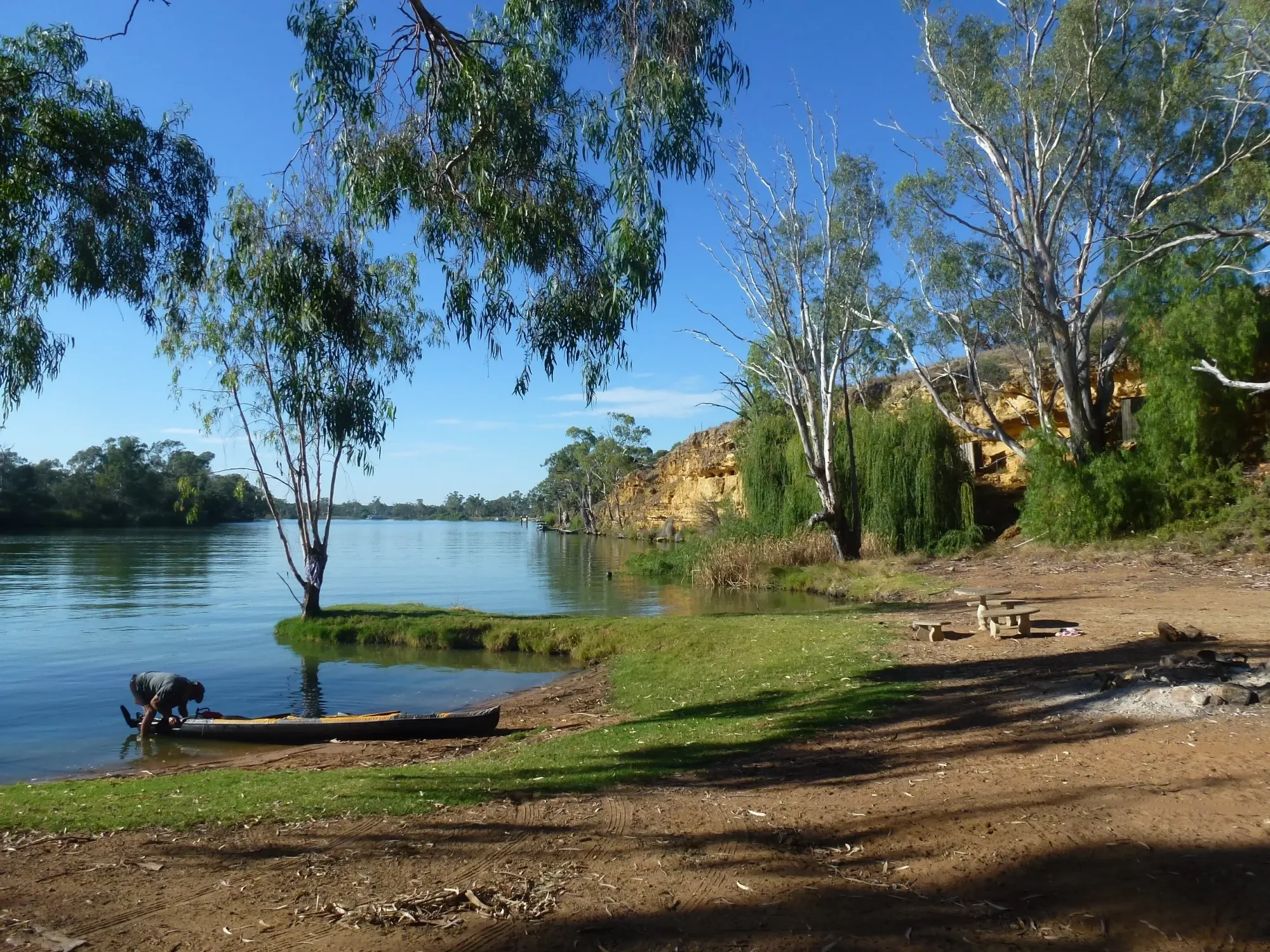
Paddling upstream from Reedy Island, the Scouts Aquatic training camp will appear on the left, followed shortly by the Roonka Homestead — one of the oldest river homesteads, established in the mid-1840s. B&B accommodation is available at Roonka Cottages. Continue upstream and you will reach Lazy B landing on a bend in the river — a concrete table and chairs make this an ideal lunch stop.
Continue upstream past Lazy B and look for the entrance to a small creek on the right-hand side at GPS 34.2839 S; 139.6423 E. There is a short portage across a roadway here. Enter this creek — the route travels around Julia Island. The Bedrock Water Ski Club operates a ski jump facility here during summer months; avoid this area when they are active. Follow the lagoon to its far end.
The lagoon exits back to the Murray River at GPS 34.2973 S; 139.6433 E. Turn downstream for the return to Blanchetown. Keep an eye on the right-hand bank approximately 500 m downstream from re-entering the river for an excellent example of a canoe tree — one of the most striking on the trail. Note: the river section near Blanchetown can be busy with motorised craft and water skiers during summer months.
Wildlife & Environment
There is abundant birdlife along the entire trail. Roonka Conservation Park — proclaimed on 27 July 1978 and covering 102 hectares on the western side of the Murray — has recorded more than 50 species of birds. The most commonly observed species include the Little Black Cormorant, Sacred Kingfisher, Yellow Rosella, Dusky Woodswallow, and Welcome Swallow. The park’s habitat near the Murray supports River Red Gum ( Eucalyptus camaldulensis) and River Box ( E. largiflorens) woodland, providing nesting and foraging habitat for this diverse birdlife.
The quieter backwater sections of Cumbunga Creek — away from river traffic — offer some of the best birdwatching on the trail. Paddling early in the morning or in the late afternoon, when the creek is still, gives the best opportunities to observe waterbirds undisturbed. The Roonka Conservation Park is also noted as a particularly productive birdwatching site, listed by Birds SA as a recognised birding location.
Country, Canoe Trees & Roonka
This trail passes through country deeply connected to the Aboriginal peoples of the lower Murray. The Roonka Conservation Park is described in the peer-reviewed archaeological literature as being excavated with the agreement of descendants of the Ngaiawang people — one of the First Peoples of the River Murray and Mallee Region whose traditional territory included this stretch of the Murray. The broader region also falls within Ngarrindjeri country as described in contemporary land management records.
The canoe trees visible along Cumbunga Creek are among the most powerful tangible connections to this Aboriginal presence. A canoe tree is a river red gum from which Aboriginal peoples carefully removed a large slab of bark to construct a bark canoe. The process required considerable skill and was performed only in summer, when the sap ran freely and the bark could be separated intact. The resulting canoe — typically around 4.5 m long — was shaped using small fires lit on the inner face of the bark, causing it to curl upward into the distinctive canoe form. The oval scar left on the living tree is permanent. The best canoe tree on the creek is found on the right-hand bank not far past the sheep ferry rope; a further outstanding example stands on the right bank of the Murray, about 500 m downstream after the trail re-enters the river.
Paddling Trails South Australia acknowledges the traditional custodians of this Country and pays respect to Elders past, present and emerging.
Roonka Flat — Australia’s Largest Excavated Burial Site
Roonka Flat, within Roonka Conservation Park, is the largest excavated Aboriginal burial site in Australia. Located on an elevated sand flat on the western bank of the Murray near Blanchetown, the site holds evidence of Aboriginal occupation spanning at least 18,000 years. Skeletal remains of approximately 200 individuals were recovered from the main excavation trenches, spanning most of the Holocene — from roughly 8,000 years before the present through to the period of European contact, around AD 1840. European artefacts including pearl buttons and a clay pipe found with some burials confirm use of the site into the historic contact period.
The site is remarkable for the diversity and complexity of its mortuary practices. The grave goods — pierced shell pendants, bone ornaments, and other decorated objects — suggest a rich spiritual and aesthetic life, and hint at social complexity among the hunter-gatherer communities who called this river home. As one historian has noted, “The cultural and aesthetic richness that existed along the River Murray was comparable with that in Arnhem Land.”
The excavation was led by South Australian Museum archaeologist Graeme Pretty, beginning in 1969 after flooding had begun to expose burials eroding from the dune. The site cannot be accessed directly from the water, but its presence is felt along the entire Roonka Conservation Park section of the trail.
Roonka Homestead & McBean Pound
The Roonka Homestead — visible from the river on the trail — was established by Lachlan and Alexander McBean in the mid-1840s and is one of the oldest river homesteads in South Australia. McBean Pound, just upstream, was one of the first sites seriously considered for a railway crossing of the Murray in the late 1850s — its suitability as a stock pound ultimately prevailed over the railway proposal. Today the Roonka property operates as the Scouts Movement’s Water Activities Centre, with the Roonka Cottages available for B&B accommodation.
Trail Gallery
7 photos