Blanchetown Swan Reach Trail
A 25 km one-way paddle from Castles Landing through the historic backwaters of Moorundie and Portee Creeks — past colonial-era homesteads, the remains of Edward John Eyre’s irrigation dams, and into the towering limestone cliffs country of Swan Reach.
- Distance
- 25 km one way
- Difficulty
- Moderate
- Trail type
- Point to Point
- From Adelaide
- 145 km north-east
The Blanchetown Swan Reach Trail is a 25 km one-way paddle through one of the Murray’s most historically layered stretches — from Castles Landing near Blanchetown, through the slow-flowing backwaters of Moorundie and Portee Creeks, to the limestone cliff country of Swan Reach. The trail passes the remains of Edward John Eyre’s 1840s irrigation dams, the 1873 Portee Homestead, and through creek corridors of towering river red gums and abundant birdlife. The moderate difficulty rating reflects the number of portages rather than any challenging water conditions — the paddling itself is flatwater throughout.
About This Trail
This is a point-to-point trail — it begins at Castles Landing near Blanchetown and ends at Swan Reach, or vice versa. Most paddlers run it north to south (Blanchetown to Swan Reach), travelling downstream. If starting from Swan Reach, be aware you will be paddling upstream for much of the route.
A car shuttle between the two ends is required. Both Blanchetown and Swan Reach have full facilities including toilets, parking and picnic areas. The trail can be completed as a long single day or a relaxed two-day paddle with an overnight camp at the pumphouse reserve near Point B.

Paddle SA is the governing body of paddle sport and recreation in South Australia. It leads and supports paddling in South Australia and encourages the safe exploration of our waterways.
Paddling Trails South Australia has a range of trails to suit different abilities. Know your ability.
🌐 paddlesa.au →Launch Sites & Route
| Site | Location | Notes |
|---|---|---|
| Castles Landing Northern launch | GPS: 34.3964 S; 139.6189 E Blanchetown/Swan Reach Rd, ~5 km from highway (east side of bridge) | 📍 Directions |
| Swan Reach Boat Ramp Southern end | GPS: 34.5686 S; 139.5954 E Swan Reach public boat ramp, just south of the ferry crossing | 📍 Directions |
Route Description (North to South)
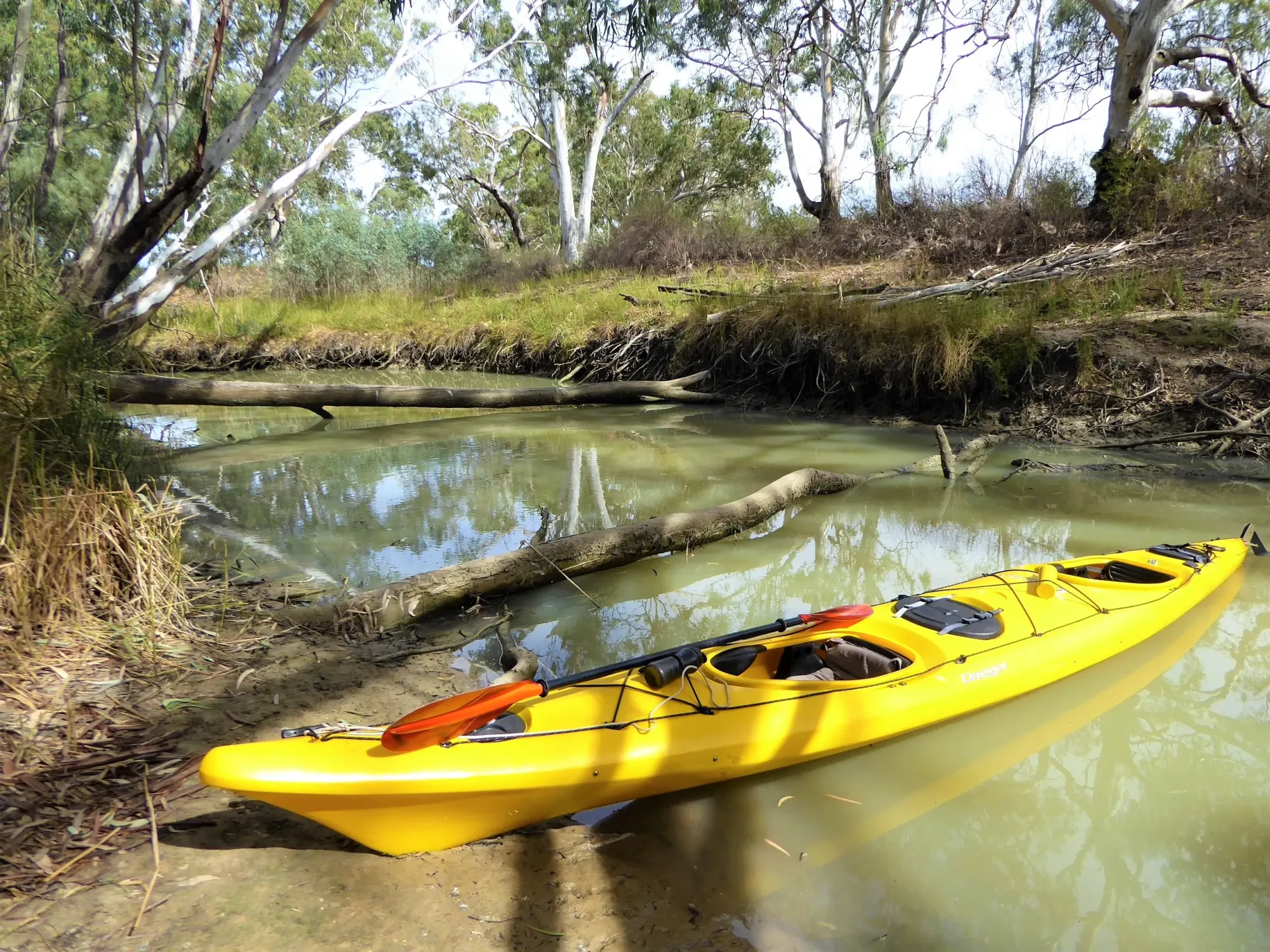
From Castles Landing, set out onto the Murray River. The entrance to Moorundie Creek is almost directly opposite the campground and is easily identified by the remains of a concrete weir visible from the river. This is Point A (GPS: 34.3969 S; 139.6159 E). There is a difficult portage near the entrance to skirt two trees lying across the creek — the most demanding portage on the trail.
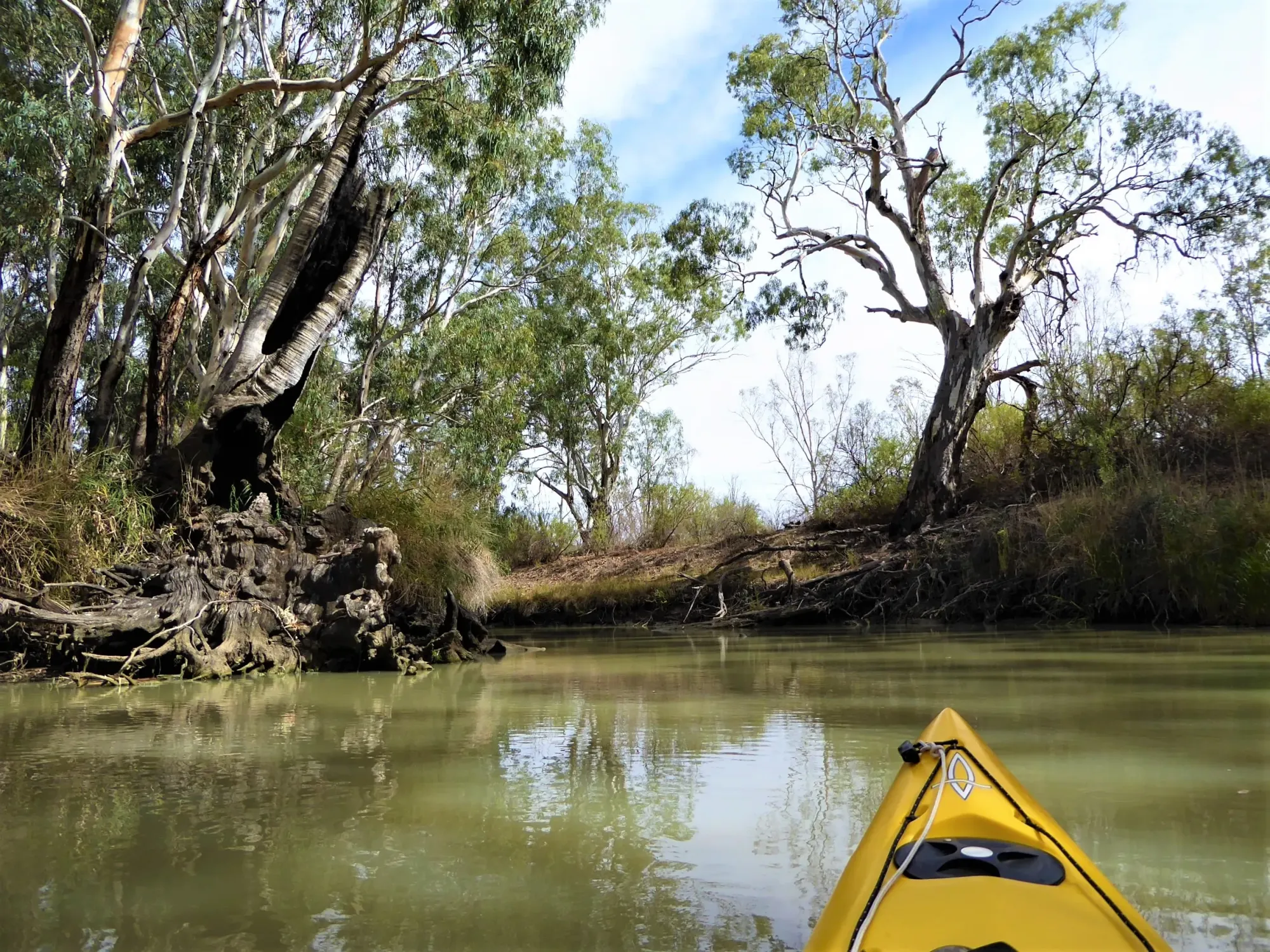
Moorundie Creek flows into Portee Creek past the historic Portee Homestead — a B&B property built in 1873 on the Murray floodplain. The homestead is visible from the water and the surrounding old river red gums and abundant birdlife make this one of the most beautiful sections of the trail. There are four more portages after Portee Homestead where tracks and roads cross the creek.
Camping is available at the reserve at the end of Swan Reach/Stockwell Road, beside the pumphouse on the western side of the river, a short distance downstream from where Portee Creek exits the Murray. This is Point B (GPS: 34.5054 S; 139.5698 E). No facilities. An ideal overnight stop if splitting the trail over two days.
The entrance to Yacto Creek is approximately 700 m upstream from where Portee Creek exits into the Murray River, at Point C (GPS: 34.4988 S; 139.5834 E). Follow Yacto Creek through to its exit. There is a further portage across a bank near its exit back to the river, after which it is only a short paddle downstream to Swan Reach.
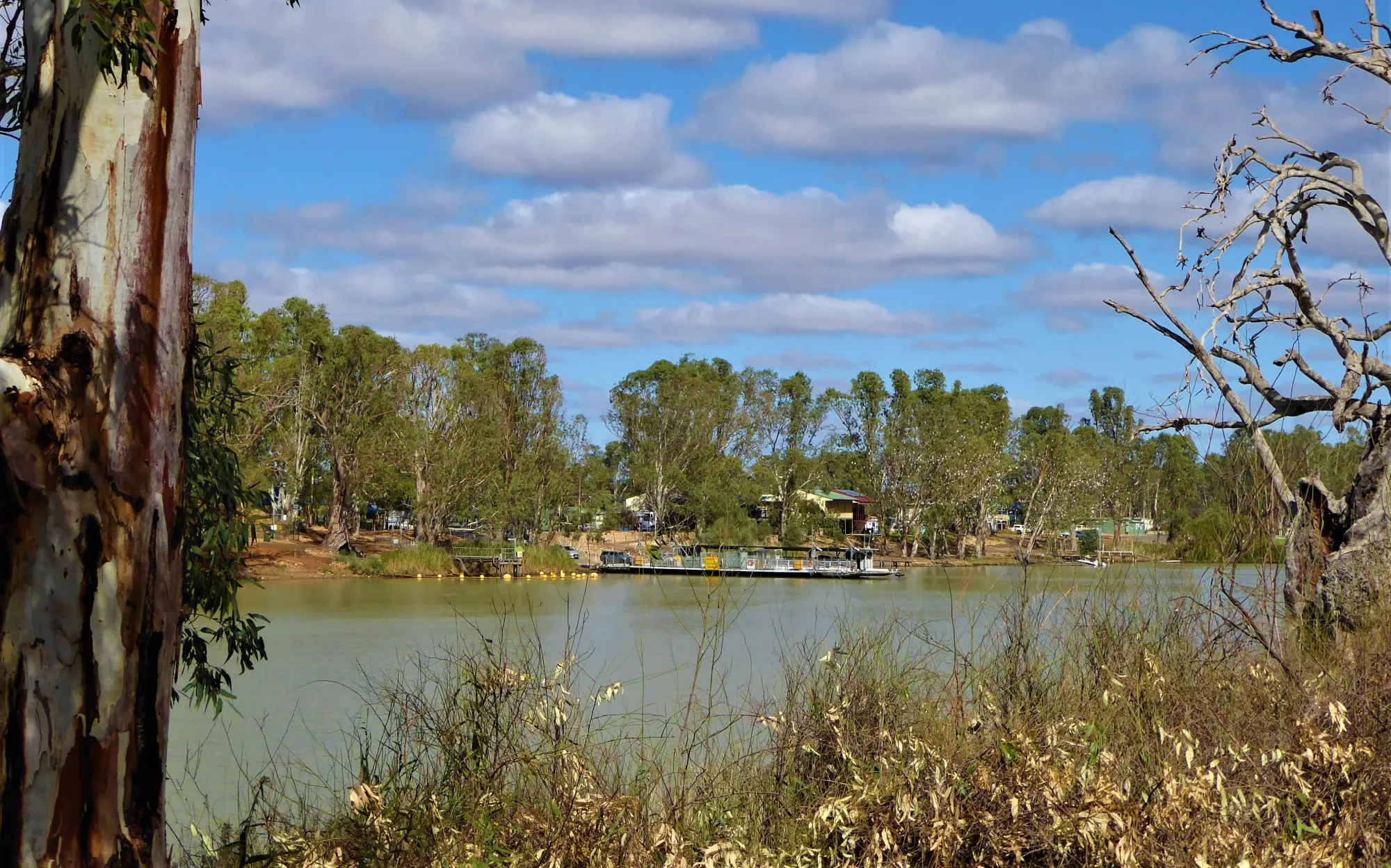
Paddle downstream toward Swan Reach. Take care negotiating the river past the ferry crossing — the Swan Reach vehicle ferry operates 24 hours and is located just north of the Swan Reach boat ramp. Pass the ferry and continue to the boat ramp (GPS: 34.5686 S; 139.5954 E). Full facilities including toilets, parking and picnic areas.
Wildlife & Environment
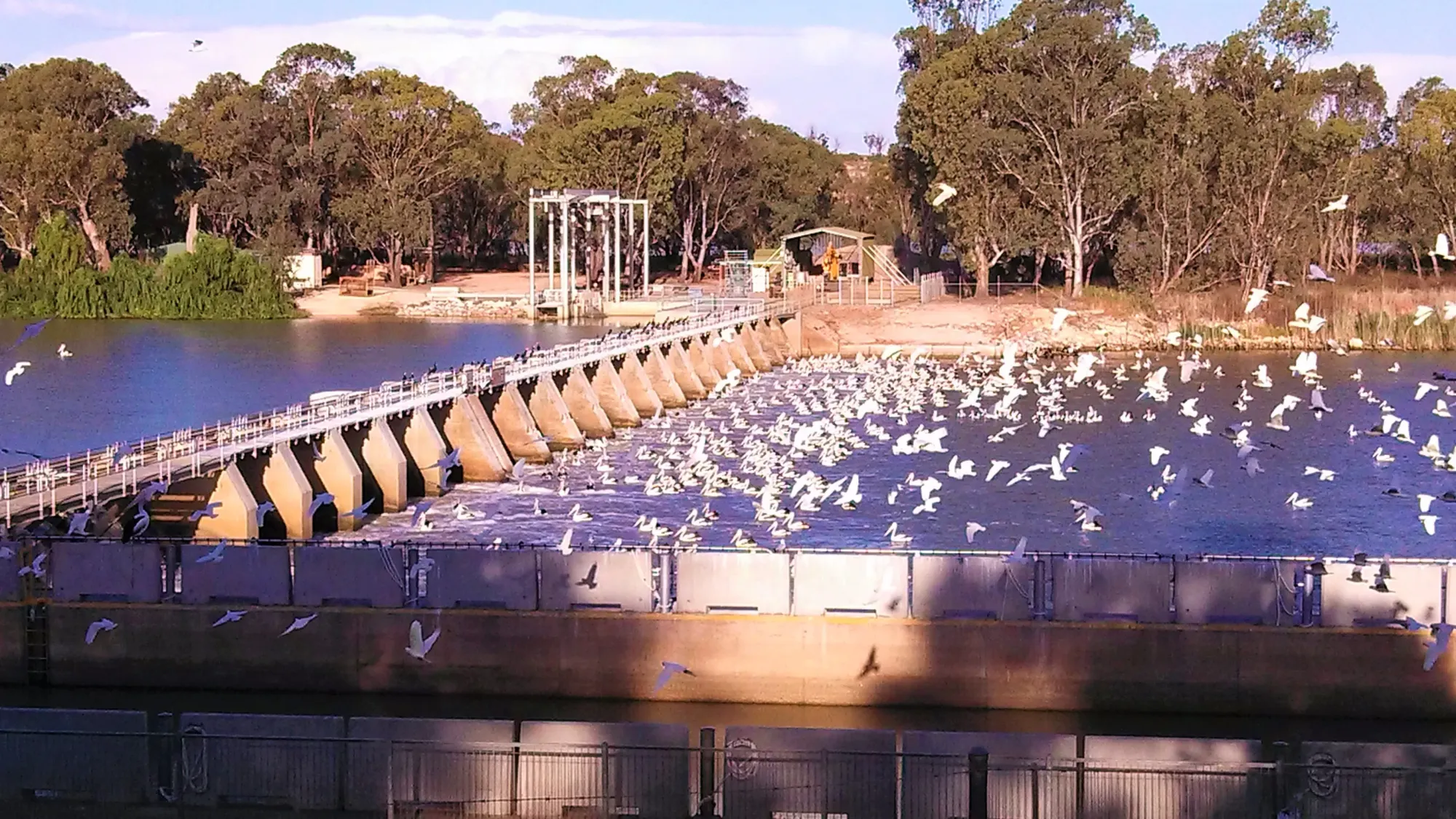
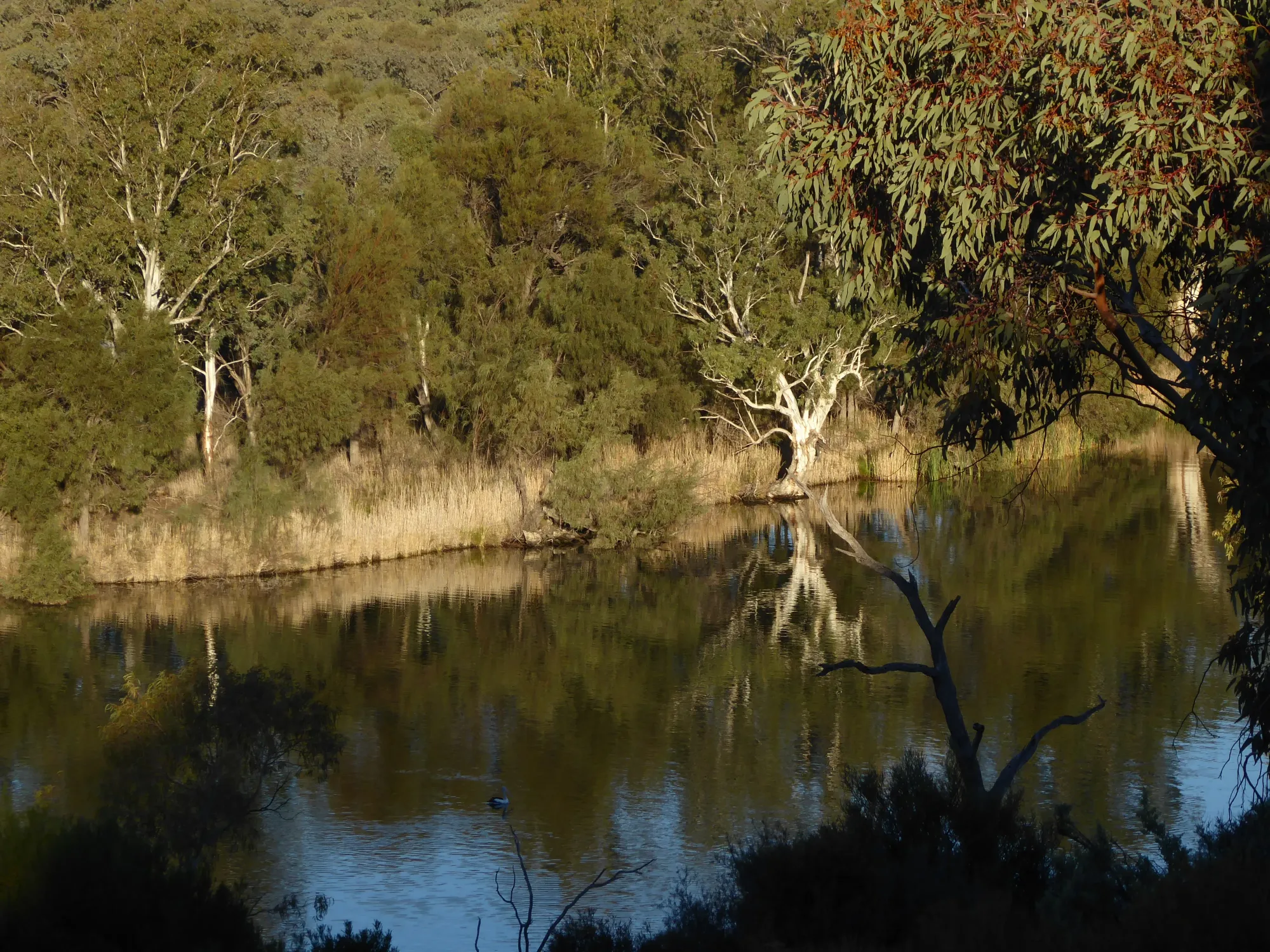
The slow-flowing backwaters of Moorundie and Portee Creeks support an exceptional diversity of waterbirds. The creek corridors are lined with mature river red gums ( Eucalyptus camaldulensis) whose canopy and hollows provide nesting habitat for parrots, cormorants, herons and waterfowl. Pelicans mass near the Swan Reach ferry during feeding time, and black swans — the bird that gives Swan Reach its name — are abundant in the backwaters and billabongs along the route.
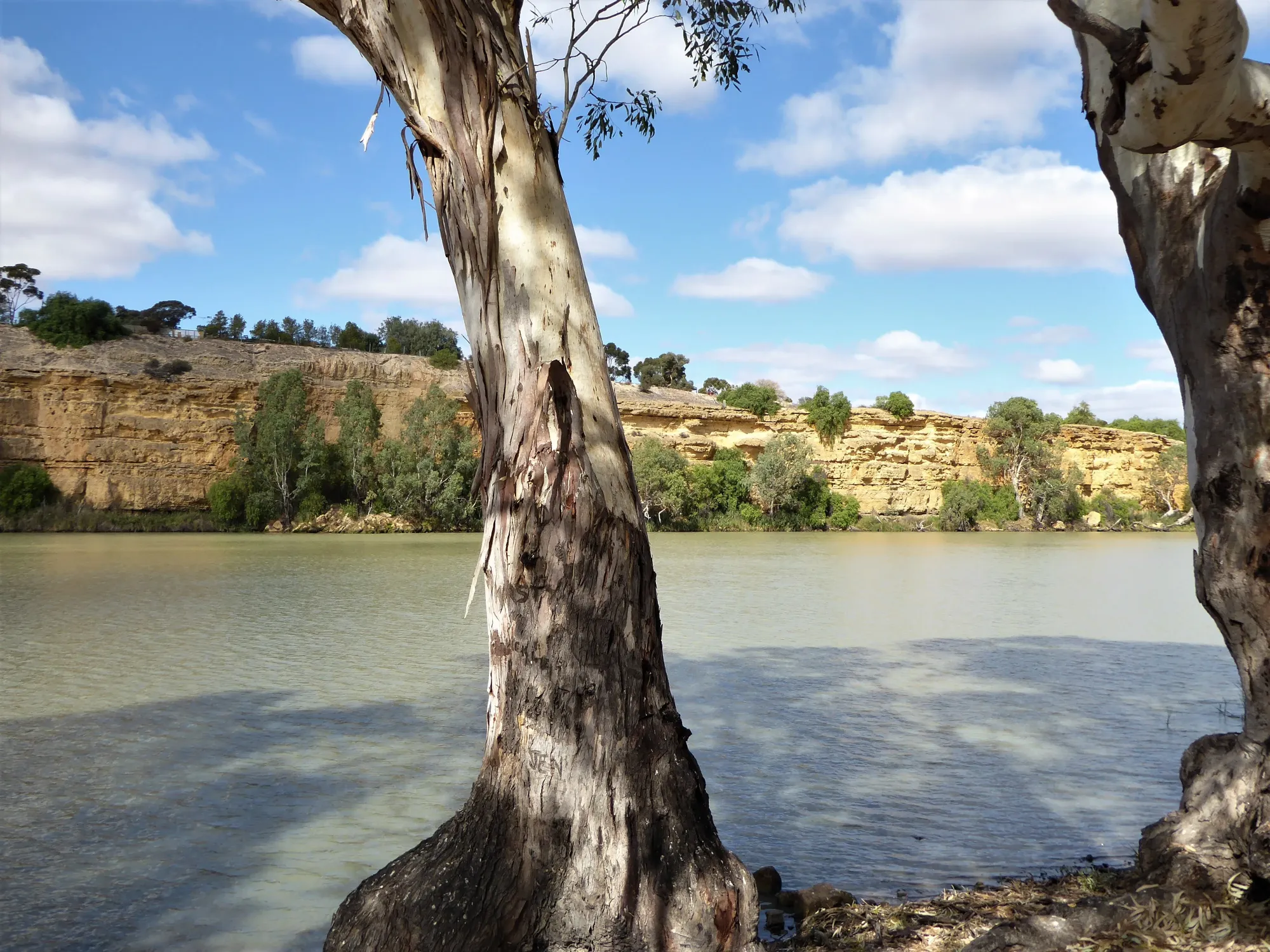
The limestone cliffs of the lower Murray that frame the Swan Reach end of this trail are geological records of an ancient inland sea. Fossilised marine shells are embedded in the cliff stone — a shark’s tooth was famously discovered in cliff stone used to build one of Swan Reach’s earliest homes. The limestone hollows and caves provide habitat for bat colonies and shelter for lizards and cliff-dwelling plants.
On the limestone plains surrounding Swan Reach, the southern hairy-nosed wombat ( Lasiorhinus latifrons) — South Australia’s state animal — inhabits the arid scrubland. The area around Big Bend, just downstream of Swan Reach, features the tallest cliffs on the entire Murray River, up to 20 million years old and rich in fossils and fauna.
Country & Heritage
The land through which this trail passes is the traditional Country of the Ngaiawang people — one of the First Peoples of the River Murray and Mallee Region, whose ancestral territory extended along the Murray from Herman Landing (Nildottie) to Penn Reach near Qualco, and west to the scarp of the Mount Lofty Ranges. The Aboriginal name for the Swan Reach area is Kongorong, reflecting the large number of black swans that have always gathered here.
The site that preceded Blanchetown was called Moorundie — a name derived from the local Aboriginal people and meaning “sand” or “sandy.” It was the first River Murray settlement in South Australia, established in 1841. Aboriginal communities in this reach of the Murray were among the most densely populated anywhere on the Australian mainland, sustained by the river’s extraordinary abundance of fish, waterfowl, mussels, yabbies and plant foods. Canoes cut from river red gum bark carried people and goods along these same waterways for tens of thousands of years before European contact.
The First Peoples of the River Murray and Mallee Region understand the Murray — Murrundi — as a living body, formed during the Creation. Its freshwater flows are the lifeblood of their Nations, their stories and their law.
Paddling Trails South Australia acknowledges the Ngaiawang people and the First Peoples of the River Murray and Mallee Region as the Traditional Owners of this Country, and pays respect to Elders past, present and emerging.
Edward John Eyre & Moorundie
Edward John Eyre established the Moorundie settlement in 1838 and was appointed Protector of the Aborigines and Special Magistrate in 1841. Operating initially without weapons or troops, he worked to manage the violent conflicts between Aboriginal peoples and overlanders driving stock from New South Wales through this territory. Moorundie became an important rations point, police outpost and river port.
Eyre was also the first major irrigator on the Murray. He built two large dams on the western side of the river at Moorunde to support his irrigation ambitions. The remains of one dam wall can still be seen near the entrance to Moorundie Creek — one of the most tangible colonial-era remnants on any paddling trail in South Australia. Both dams were destroyed in the catastrophic 1852 Gundagai Flood. Eyre had returned to England in 1843.
Blanchetown & Lock 1
Blanchetown was surveyed in October 1855 on the cliffs above the flood-prone Moorundie site, and named after Lady Blanche MacDonnell, wife of Governor Sir Richard MacDonnell. It became an important stop on the Adelaide-Sydney coaching road, but the 1878 railway to Morgan — bypassing Blanchetown — set back the town’s growth and reduced steamer traffic.
Lock 1 at Blanchetown was the first of 13 locks and weirs built on the Murray River under the River Murray Waters Agreement, completed in 1922. It was built to facilitate navigation and maintain water levels for irrigation; the pool upstream sits 3.6 metres above sea level, 274 km from the Murray Mouth. The 1963 Blanchetown bridge — the first major prestressed concrete highway bridge in South Australia — was replaced in 1998; the original structure remains as a pedestrian crossing.
Swan Reach & Goyder’s Line
Swan Reach takes its name from both the massed black swans that nest here and the swan’s-neck curve of the river at this point. The township was established in 1899 when station owner Paul Hasse subdivided a portion of his land. The river has tested this community repeatedly — devastating floods struck in 1917 and 1931, with the 1956 flood washing away most of the main street. Goyder’s Line — the 1865 survey by Surveyor-General George Goyder marking the boundary of reliable rainfall for agriculture — crosses the Murray precisely at Swan Reach, still remarkably accurate after more than 150 years.
Trail Gallery
6 photos