Aroona Dam Paddling Trail
An outback oasis in the northern Flinders Ranges — paddle a 5 km loop around a stunning reservoir framed by quartzite ranges, red gums and extraordinary wildlife.
About This Trail
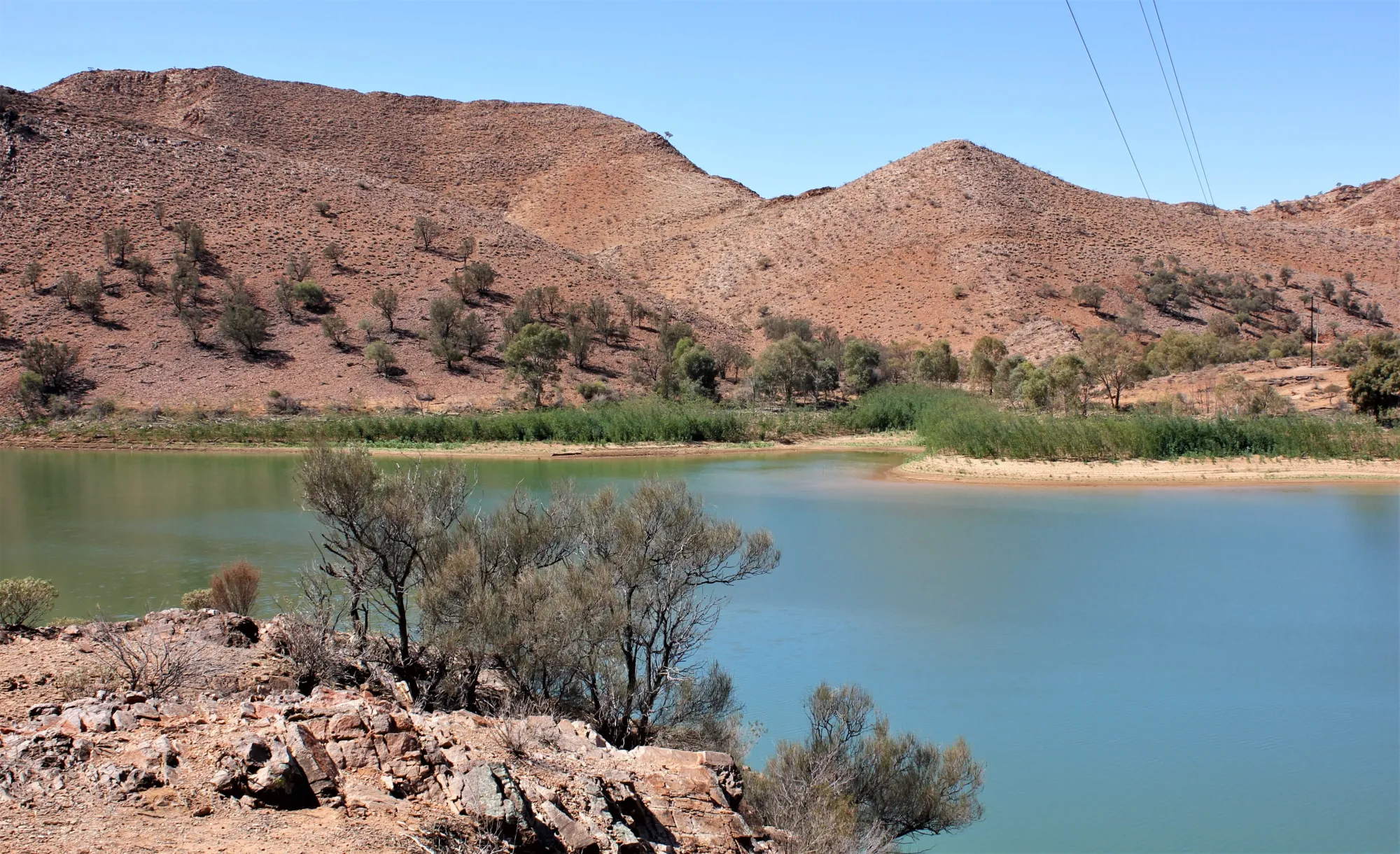
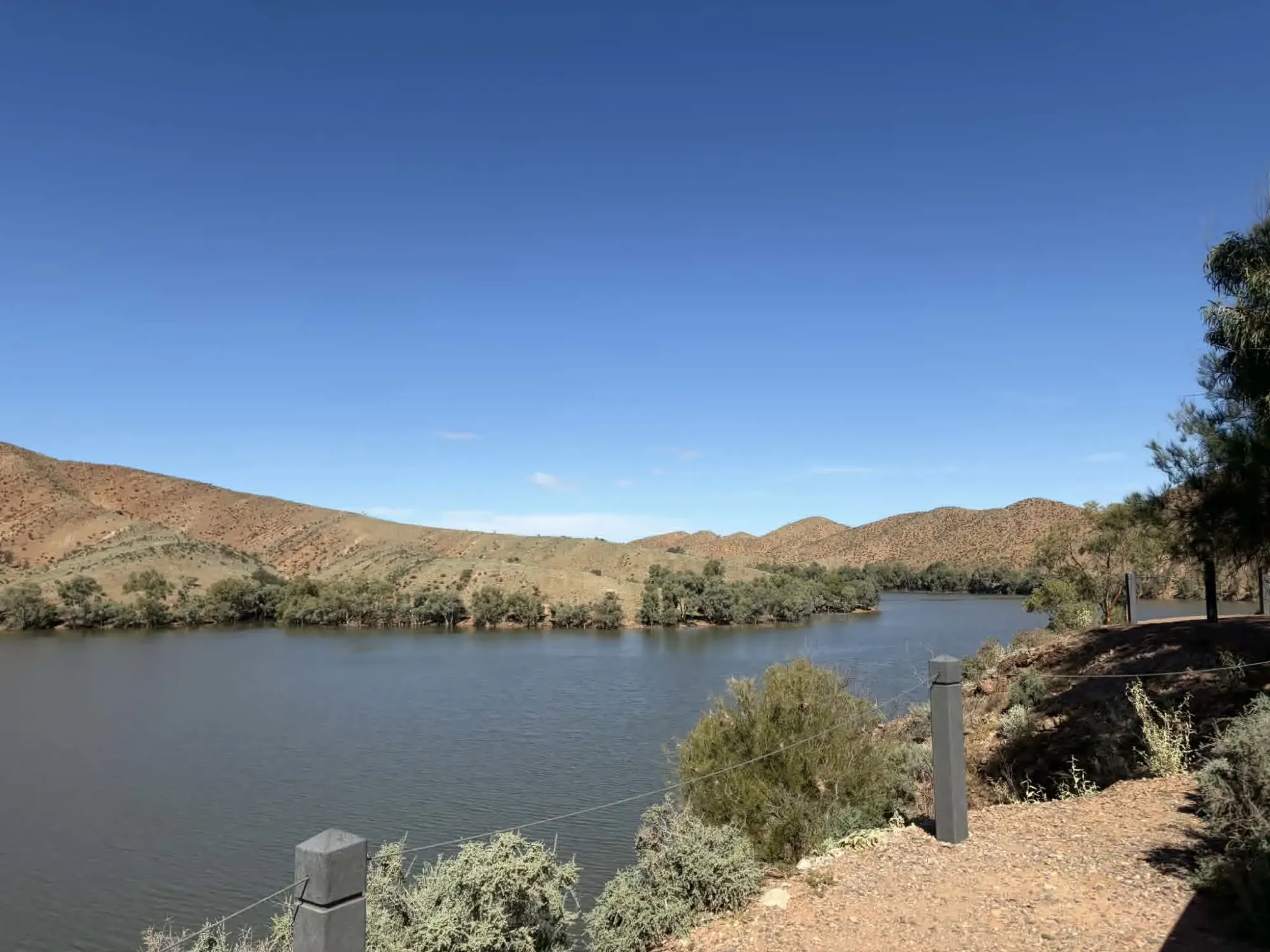
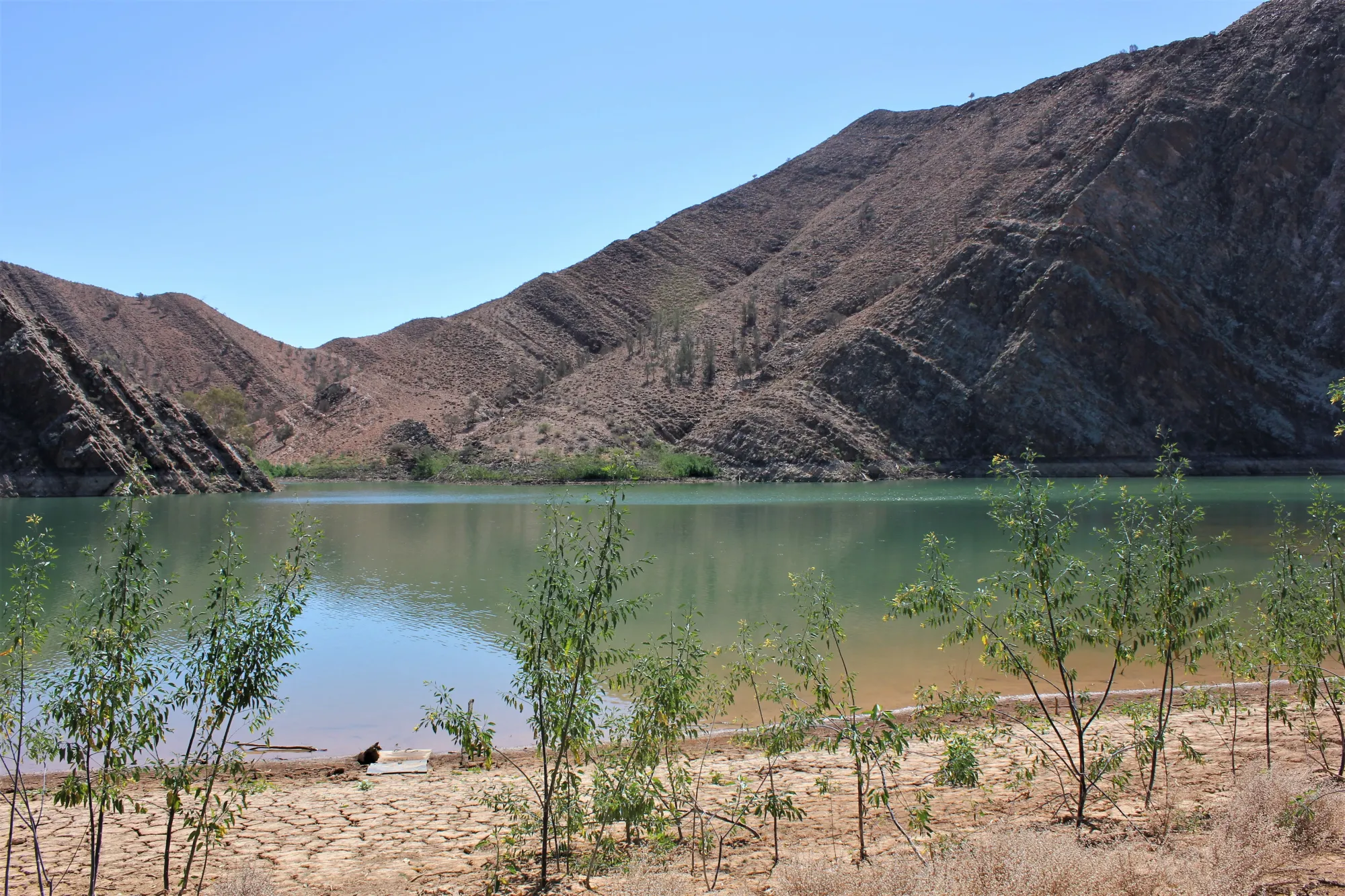
Aroona Dam is one of South Australia's most unexpected paddling destinations — a shimmering reservoir set deep in the arid northern Flinders Ranges, just 6 km south of Leigh Creek. Hemmed in by ancient Precambrian quartzite ridges and fringed with river red gums, the dam is a living oasis in the outback, drawing an extraordinary array of wildlife to its calm, protected waters.
The 5 km loop is a peaceful paddle suitable for beginners and families, with no current, no tides and no powerboat traffic. The dam extends approximately 3.5 km east of the concrete gravity wall, offering plenty of room to explore at your own pace. Keep your eyes open — wallabies, kangaroos, swans and turtles are regularly seen at the water's edge, and over 100 bird species have been recorded here.
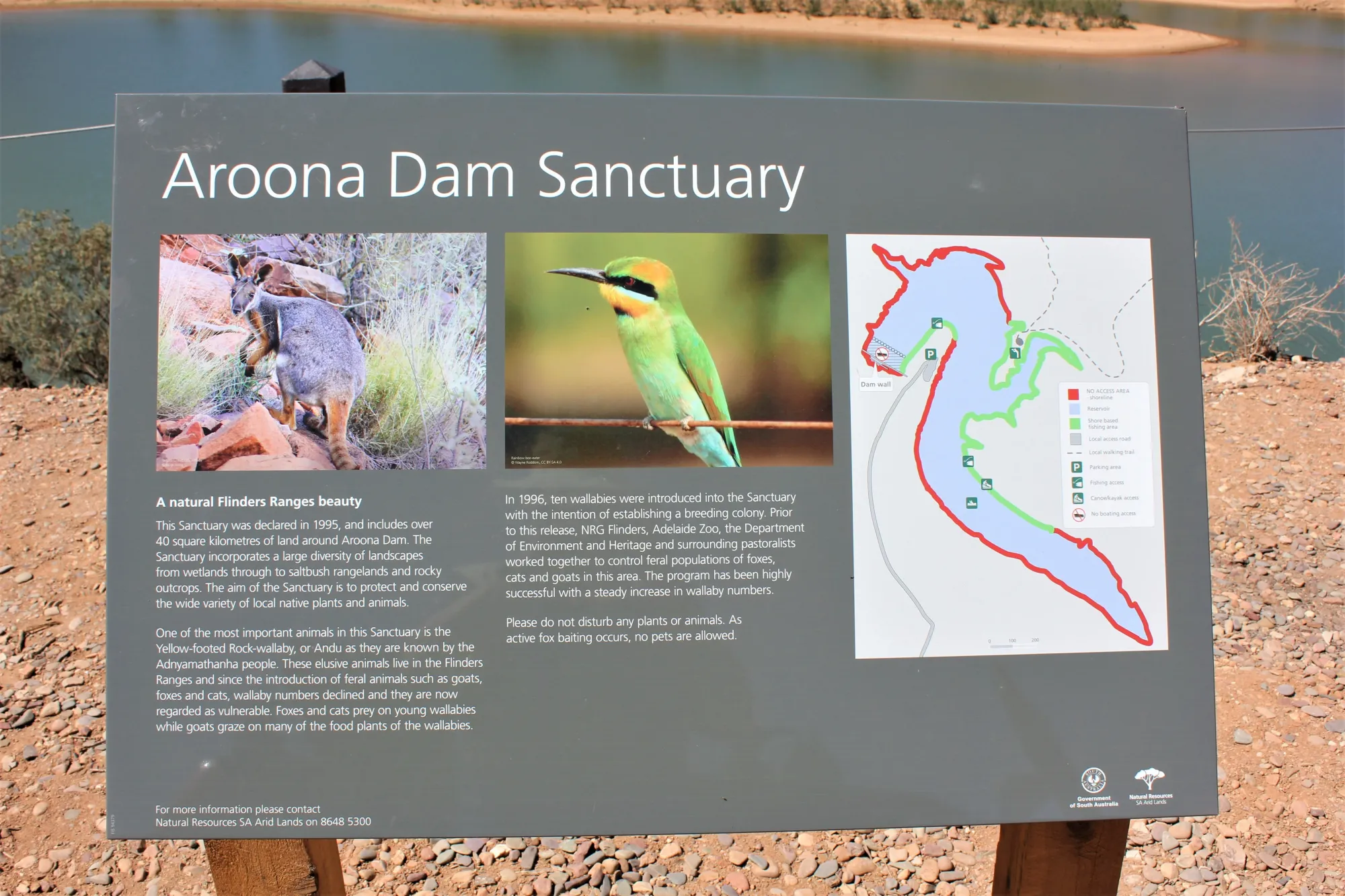
The surrounding Aroona Sanctuary (declared 1995) encompasses 2,948 hectares of rehabilitated arid-land habitat, recognised as one of Australia's most successful environmental restoration projects. The site is also home to the reintroduced yellow-footed rock-wallaby, released here in 1996 from a captive breeding programme at Monarto.

Paddle SA is the governing body of paddle sport and recreation in South Australia. It leads and supports paddling in South Australia and encourages the safe exploration of our waterways.
Paddling Trails South Australia has a range of trails to suit different abilities. Know your ability.
🌐 paddlesa.au →Trail Map
| Site | Location | Notes |
|---|---|---|
| Parking | Above the dam wall — GPS: 30.5851 S, 138.3603 E | |
| Launch | Improvised ramp below dam wall — GPS: 30.5848 S, 138.3606 E | |
| Toilets | Available at picnic area above dam wall | |
| Picnic | Two picnic areas with barbecues, tables, benches and shade trees | |
| Access road | 6 km unsealed track south of Leigh Creek (turn-off 5–6 km south of town on Hawker Rd). Rocky surface — SUV or high-clearance recommended; sedan not advised. | |
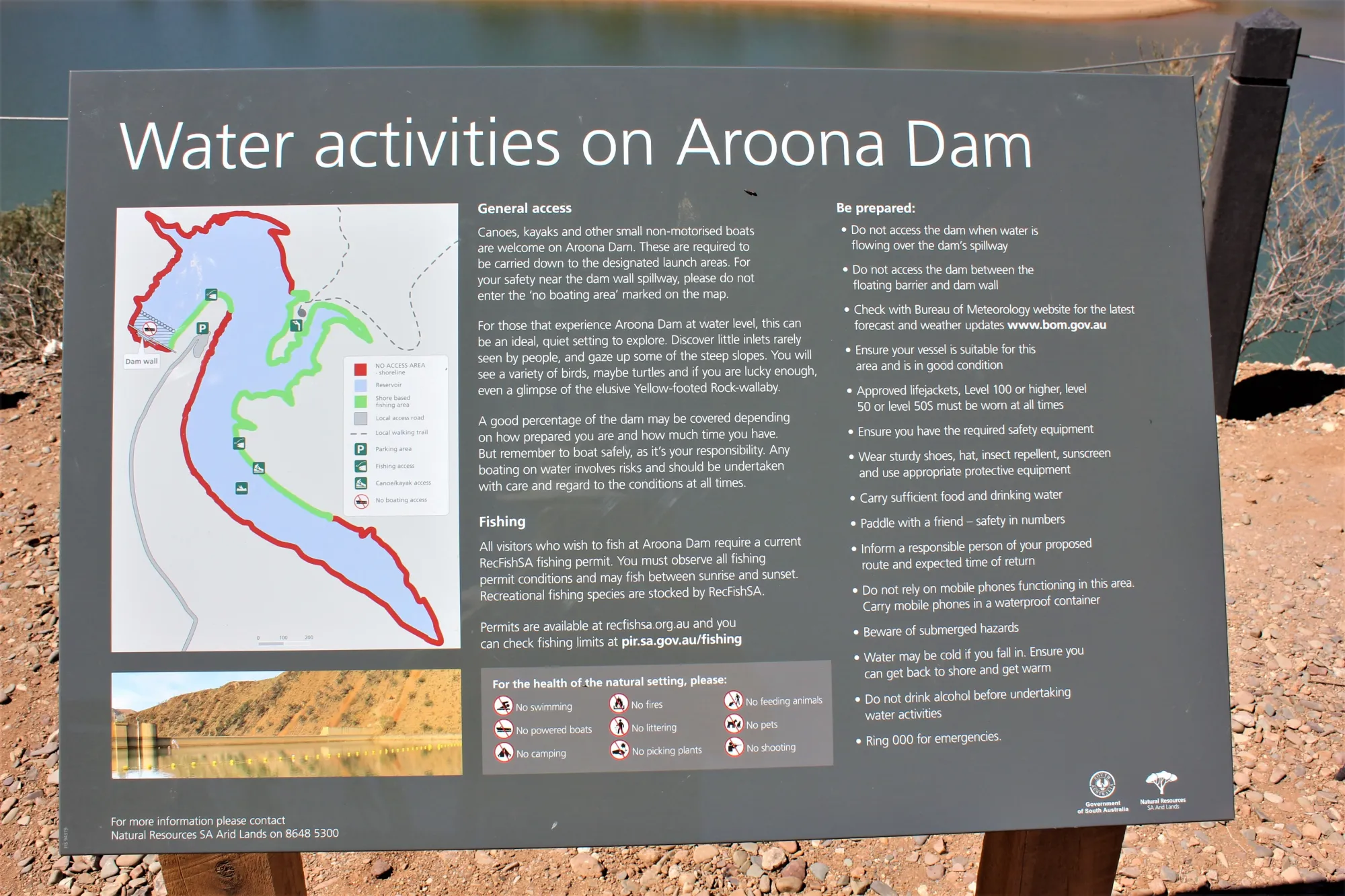
| No swimming | Swimming is not permitted in the dam | |
| Fishing | Dam stocked with Murray Cod and Callop — valid fishing permit required |
Route Description
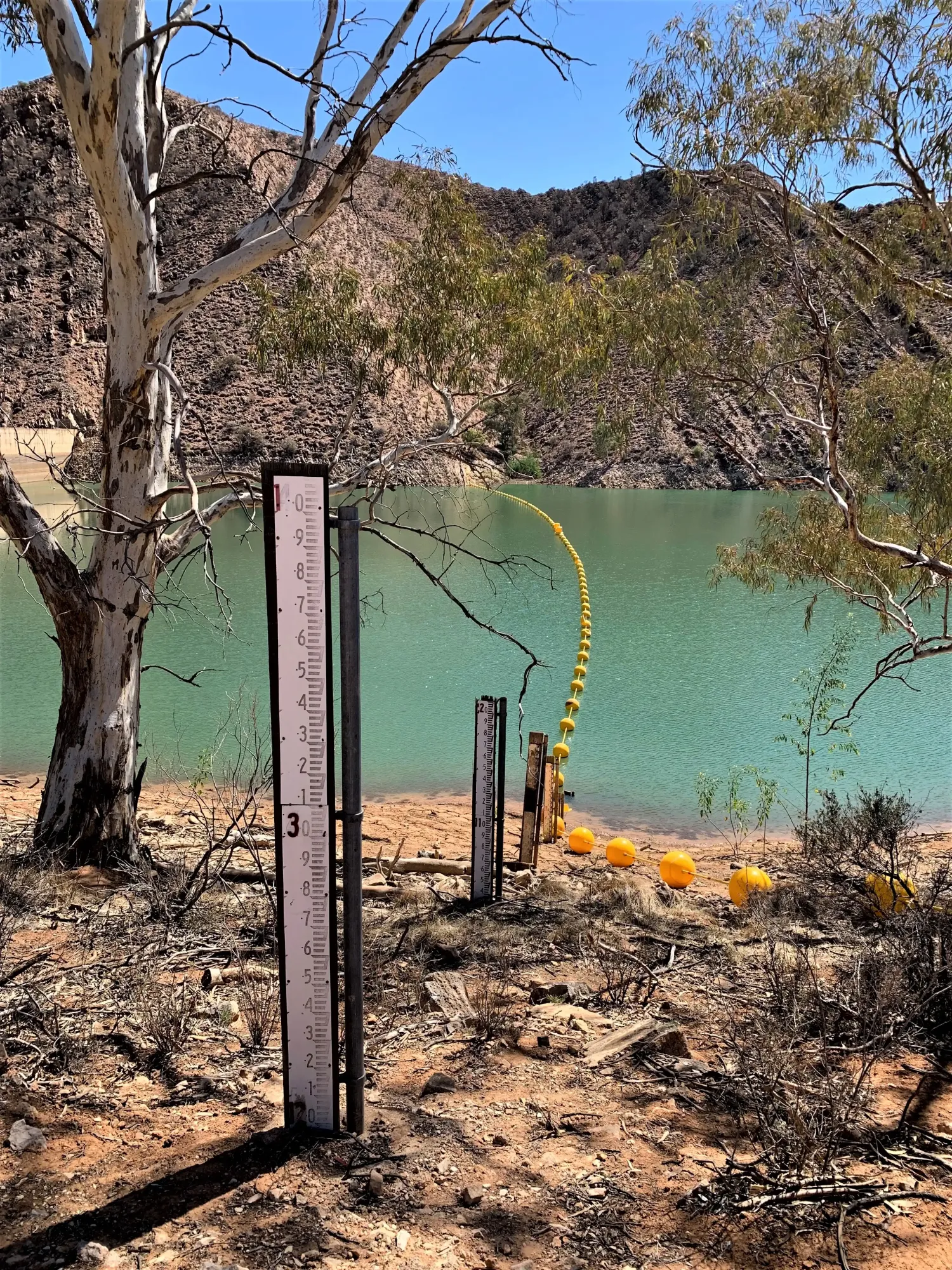
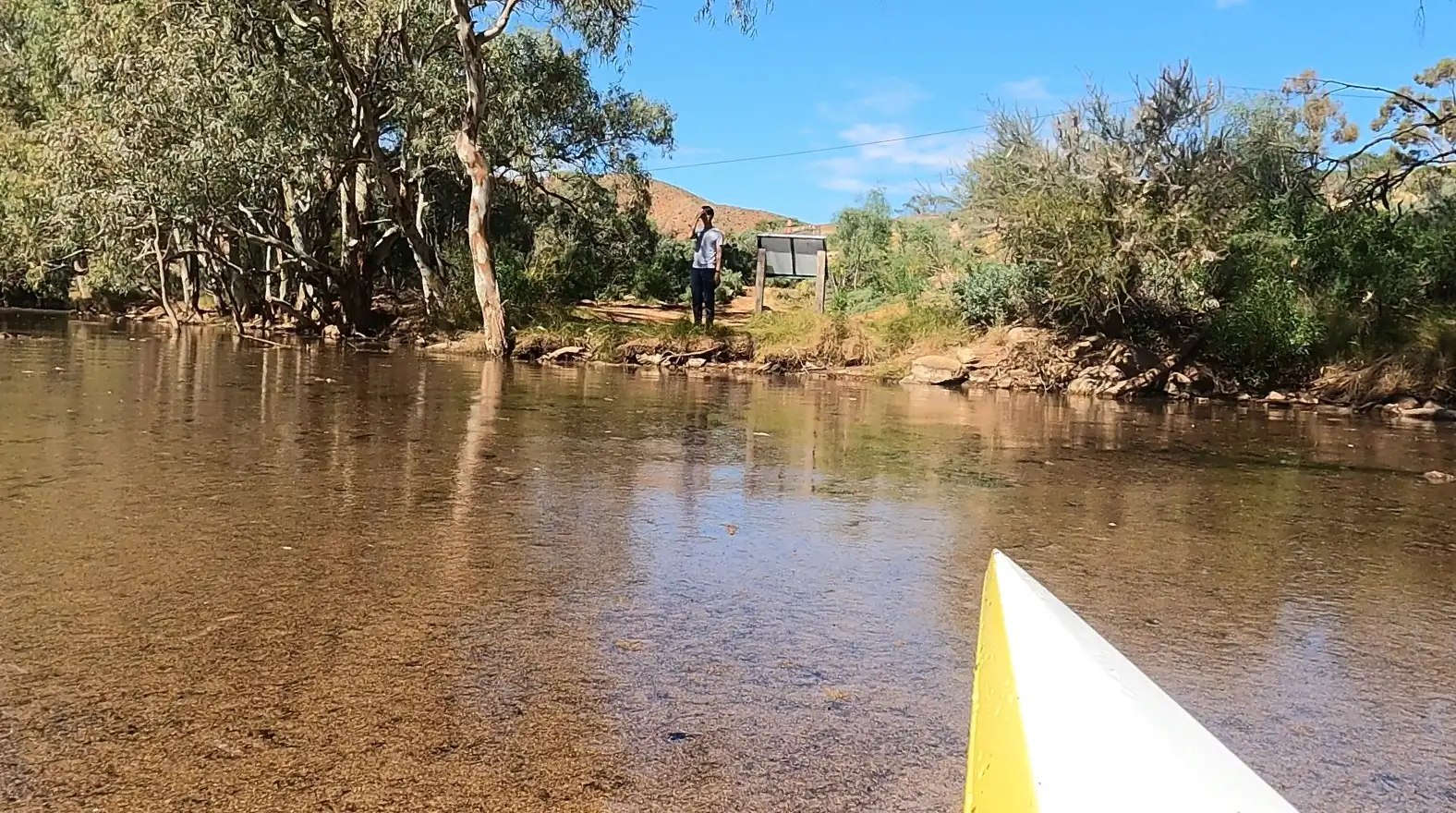
Put in at the improvised launch ramp below the dam wall. Parking and toilet facilities are located above the dam wall. The lake extends approximately 3.5 km east from the wall — paddle east into calm, open water.
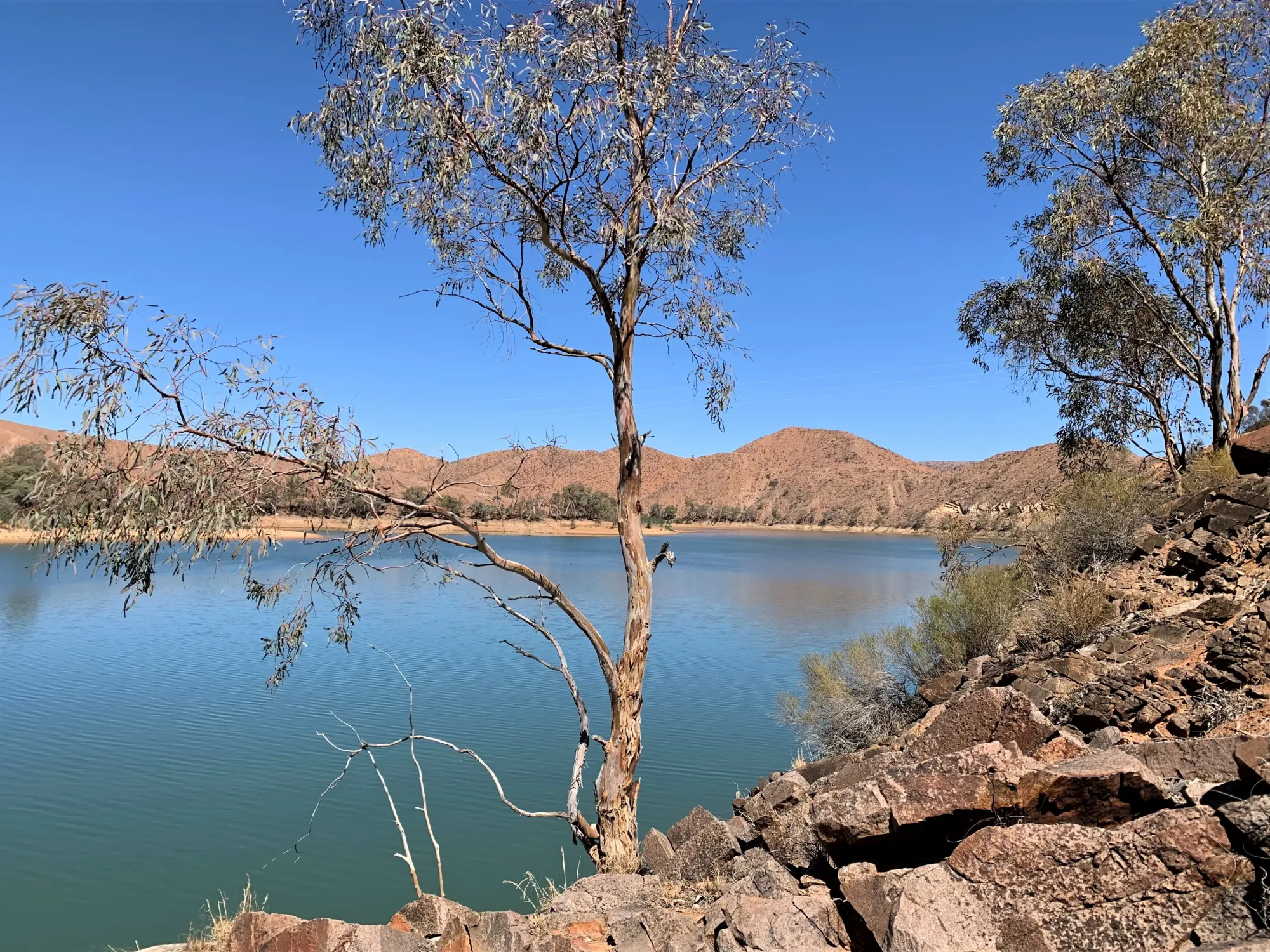
Hug the northern shoreline, where Mount Aroona rises on the ridge above. Red gums and rocky outcrops line the banks — scan them carefully for kangaroos, yellow-footed rock-wallabies and waterbirds. Rainbow bee-eaters nest in the quartzite walls.
Reach the eastern shallows where Arrunha Creek feeds into the dam. This area can be particularly active with birdlife — musk ducks, grebes, swans and herons are commonly seen. Turn and begin your return along the southern shore.
Paddle back along the southern shore, which offers views up to the quartzite ridgeline. Watch for turtles basking near submerged rocks in warmer months. Return to the launch ramp to complete the loop.
Points of Interest
History
Aroona Dam
Built 1952–1957 by the Electricity Trust of SA, the concrete gravity dam stands 24 m high and 236 m wide, impounding 7,500 megalitres on Arrunha Creek. It supplied Leigh Creek township and the coalfield for decades before being replaced by artesian water treatment.
Conservation
Aroona Sanctuary
Declared in 1995 across 2,948 hectares, the sanctuary reversed severe land degradation caused by rabbits, feral goats and overgrazing. It won three SA State Landcare Awards and a Mining Industry Award for Environmental Excellence — a model for arid-land rehabilitation worldwide.
Wildlife
100+ Bird Species
The dam supports an exceptional concentration of birdlife for an arid environment. Common species include Musk Duck, Hoary-headed Grebe, White-plumed Honeyeater, Rainbow Bee-eater, Striated Pardalote and Chestnut-rumped Thornbill. Kangaroos, wallabies and freshwater turtles also frequent the shoreline.
First Nations
Adnyamathanha Country
Aroona Dam lies on the Country of the Adnyamathanha people — the "Rock People" of the northern Flinders Ranges. The original Arrunha Awi (Aroona Waterhole) now rests beneath the dam's waters. The Adnyamathanha hold native title over this region, recognised by the Federal Court in 2009, and maintain deep spiritual connection to this landscape.
Trail Gallery
8 photos