North Arm Ships Graveyard
Paddle among 26 historic wrecks in the Port River — one of the world’s largest and most diverse ships’ graveyards, just 14 km from Adelaide.
- Distance
- 6 km return
- Difficulty
- Easy
- Trail type
- Return
- From Adelaide
- 14 km north-west
The southern shore of Garden Island in the North Arm of the Port River holds one of the world’s largest and most diverse ships’ graveyards — 26 vessels ranging from iron-hulled sailing ships to barges and dredgers, all resting in tidal shallows best explored by canoe or kayak, just 14 km from Adelaide’s city centre.
About This Trail
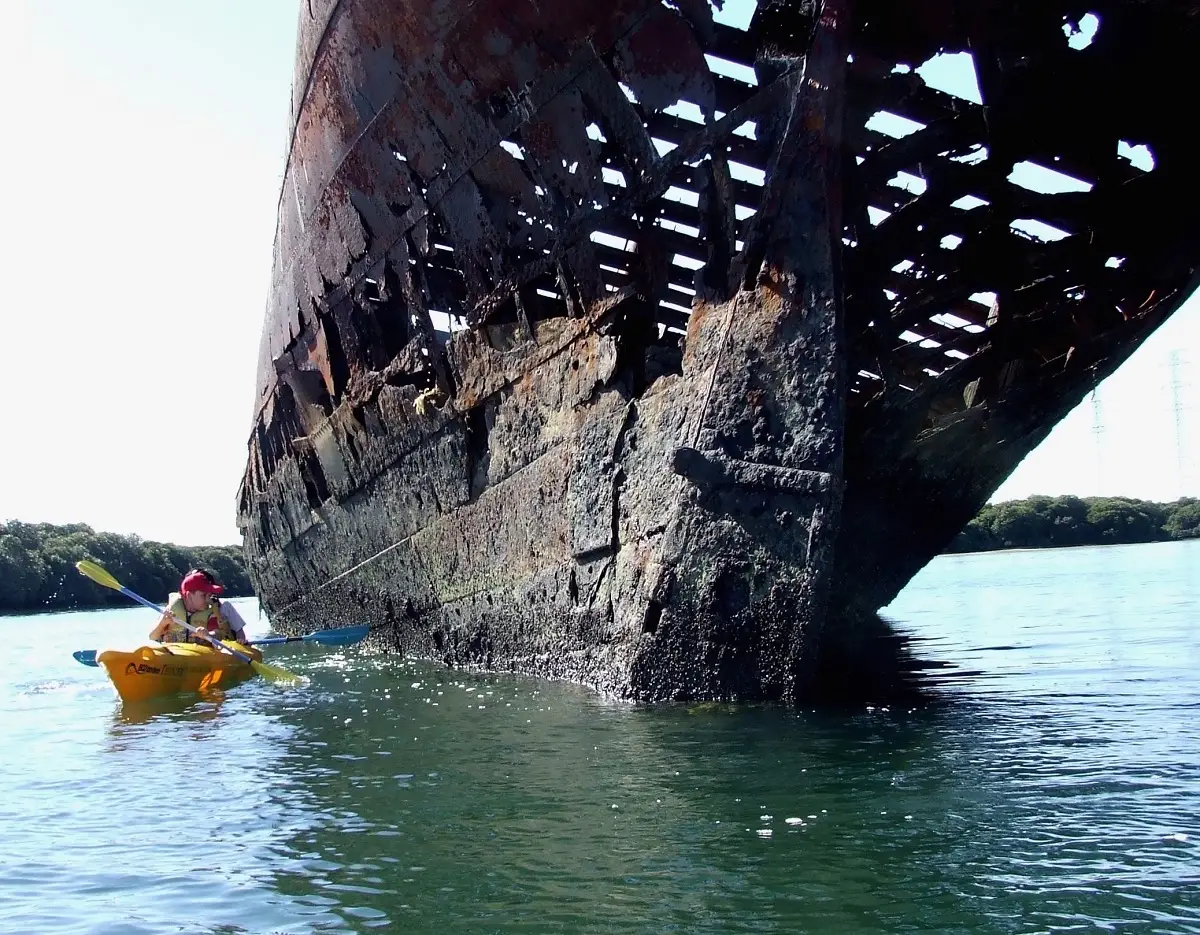
The Garden Island Ships’ Graveyard sits within the Adelaide Dolphin Sanctuary. When vessels became unserviceable, anything of value was stripped before they were towed to their final resting place in North Arm. Some were broken up with explosives; others simply settled into the mud as the years passed.
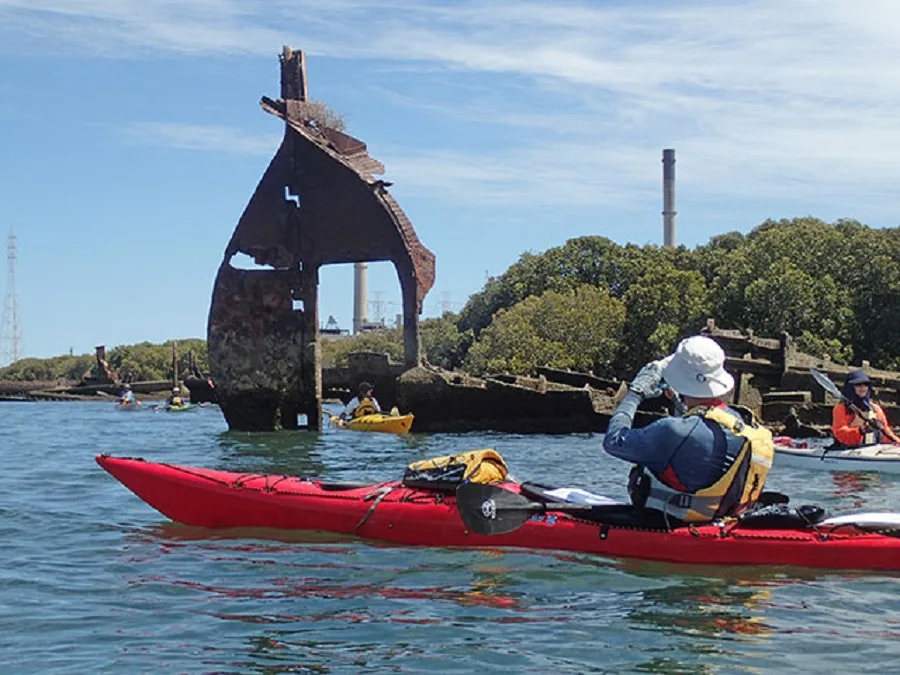
The graveyard contains vessels dating back to 1856, spanning sailing ships, steamers, motor vessels, ferries, barges, dredgers, and pontoons. The site is now a haven for birdlife and marine creatures — pelicans, cormorants, and egrets nest among the rusting hulls, while the waters below shelter fish and invertebrates. Three on-water interpretation signs mark the main wreck cluster, with two additional on-land signs at the Garden Island boat ramp.

Paddle SA is the governing body of paddle sport and recreation in South Australia. It leads and supports paddling in South Australia and encourages the safe exploration of our waterways.
Paddling Trails South Australia has a range of trails to suit different abilities. Know your ability.
🌐 paddlesa.au →Launch Site & Route
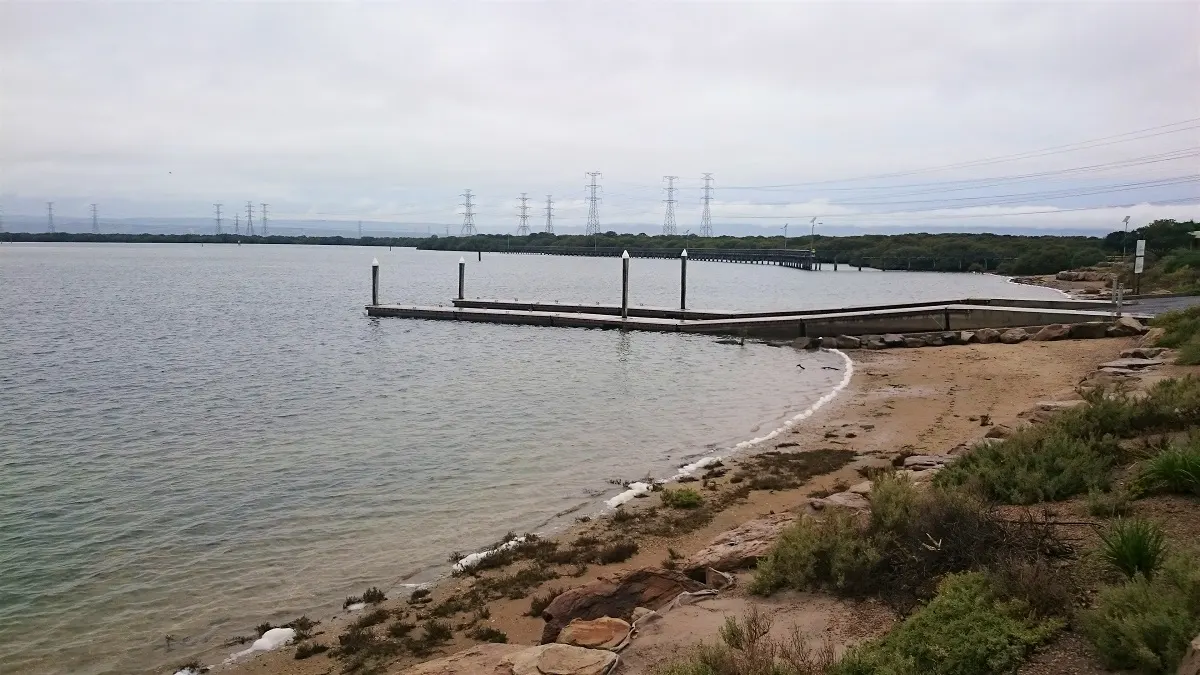
Launch from the Garden Island boat ramp on Grand Trunkway, Garden Island. The ramp is often busy with powered craft — give way to all motorised vessels when launching and in the boating channel. Free parking, BBQ facilities, picnic tables, toilets, and change rooms are all on site.
| Site | Location | Notes |
|---|---|---|
| Garden Island Boat Ramp | Grand Trunkway, Garden Island, Port Adelaide. GPS: 34.8046 S; 138.5400 E. Free parking, toilets, change rooms, BBQ, picnic tables. |
Route Description
From the Garden Island boat ramp, head east along the foreshore before turning right (south) into the North Arm channel. Give way to any motorised vessels in the channel and stay close to the southern bank.
The first wreck encountered is the Santiago — considered the oldest intact iron-hull sailing vessel in the world. Three on-water interpretation signs are located nearby explaining the history of the graveyard.
Continue west past the massive frame of the Dorothy H Stirling, visible as a distinct island at low tide. Take care not to run aground on the sandbar along the northern shore. The barque Garthneill lies nearby.
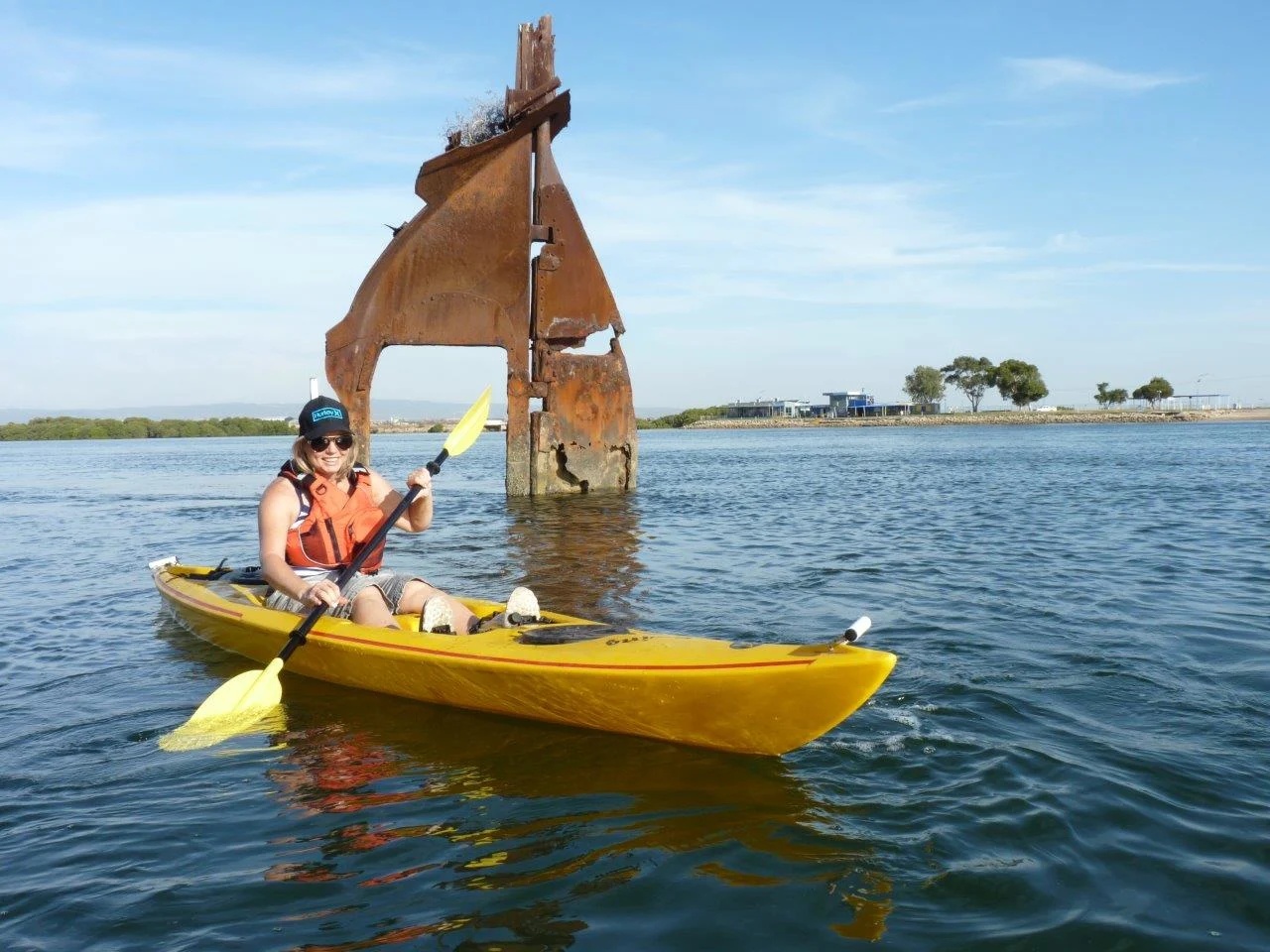
The prominent sternpost and rudder of Glaucus mark the western end of the main cluster. Sunbeam is the last clearly visible wreck above water. Seminole lies submerged just beyond — best glimpsed at the lowest tides. Retrace your route back to the Garden Island boat ramp.
Points of Interest
The graveyard contains 26 wrecks in varying states of preservation. The four most significant are described below.
Built 1856 · Abandoned 1945
Santiago
Considered the oldest intact iron-hull sailing vessel in the world. She sailed mainly between Liverpool and Chile for the Balfour Williamson shipping line before arriving in Adelaide in 1901. Sacrificial anodes are now in place to help stabilise the remaining hull.
Built 1920 · Portland, Oregon USA
Dorothy H Stirling
A large six-masted wooden schooner — originally named Oregon Pine — she was one of the largest sailing vessels built at the time. A casualty of the Great Depression, her owners could no longer pay harbour dues or crew wages. At low tide her remains form a distinct island in North Arm.
1,470 ton barque · Abandoned 1935
Garthneill
A three-masted barque, 72.6 m long. In 1919 she battled relentless gales and was forced to round Cape Horn — covering 14,563 nautical miles on a voyage that should have been approximately 2,000. She later served as Australia’s only floating electric barley-grading mill.
Western wreck group
Glaucus, Sunbeam & Seminole
The prominent sternpost and rudder of Glaucus mark the western end of the main cluster. Sunbeam is the last clearly visible wreck above water. Seminole lies submerged just beyond — best glimpsed at the lowest tides.
Wildlife & Environment
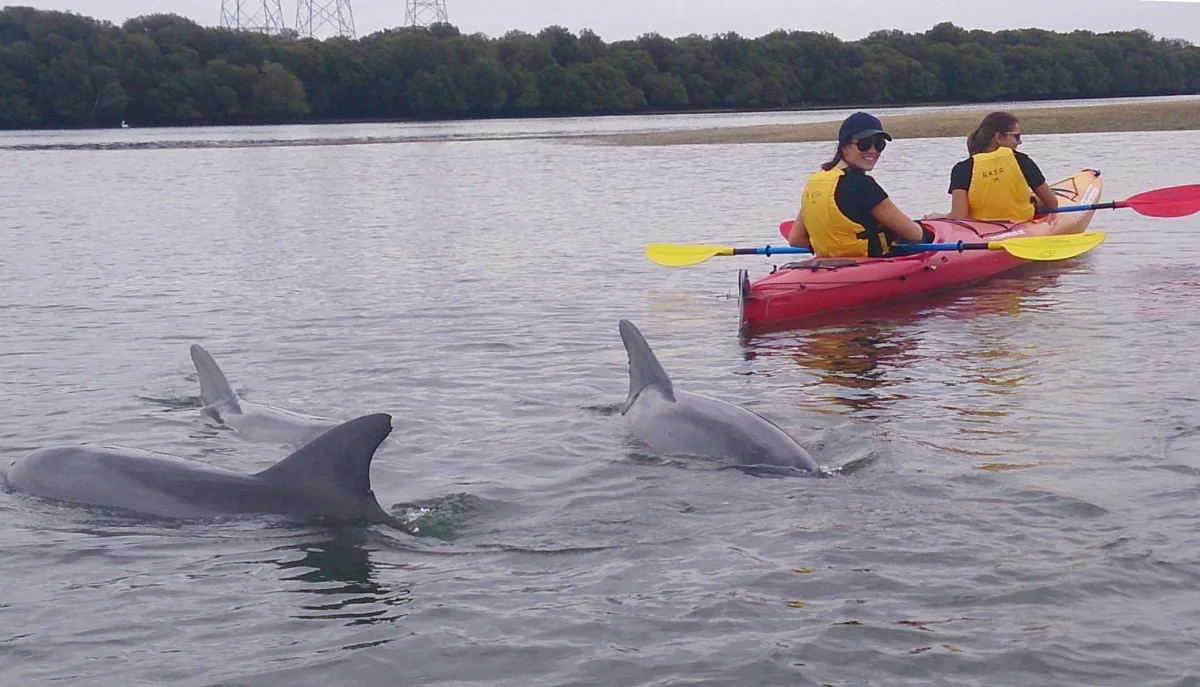
The Garden Island Ships’ Graveyard sits within the Adelaide Dolphin Sanctuary, and paddlers regularly encounter the Port River’s resident bottlenose dolphins. The rusting hulls and sheltered tidal waters have become rich habitat — look for pelicans, great egrets, royal spoonbills, and various cormorant species roosting on the exposed ironwork.
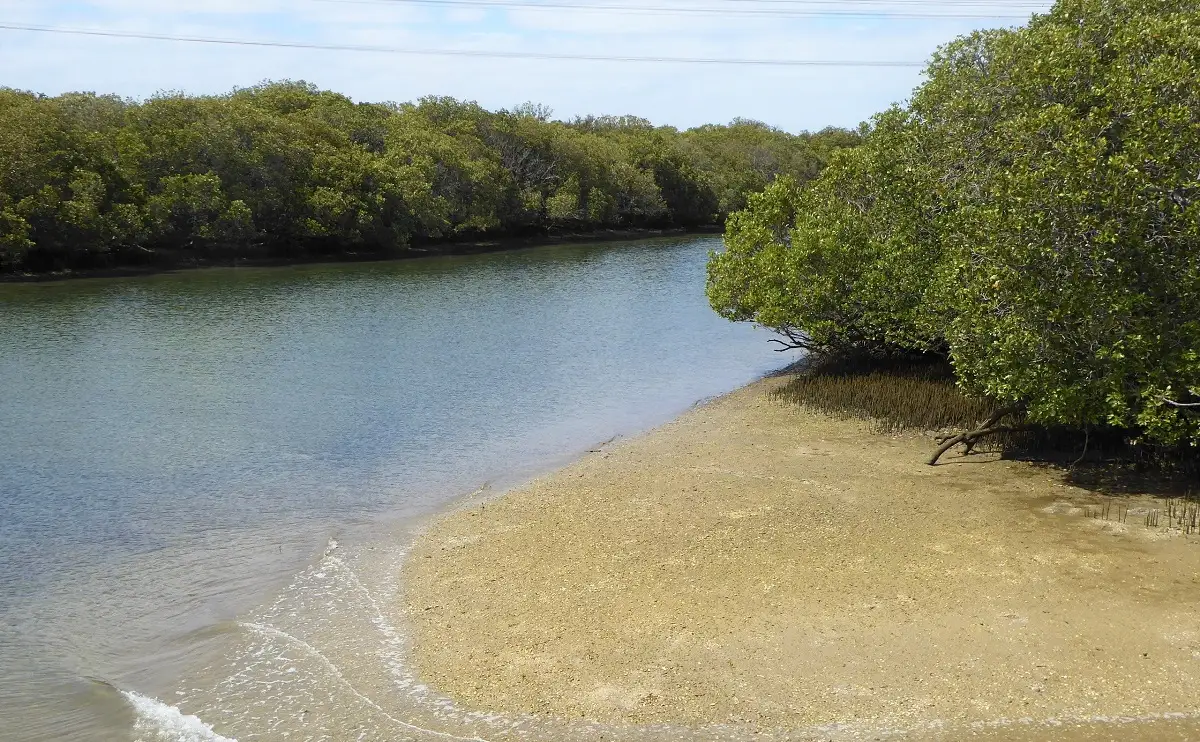
Below the waterline, the wrecks function as artificial reefs. Leafy seadragons, bream, and mullet can often be spotted in the clear tidal shallows. Mangroves fringe portions of the North Arm foreshore, providing additional habitat and helping filter the water. This combination of industrial heritage and living ecosystem makes the trail unlike any other paddle in South Australia.