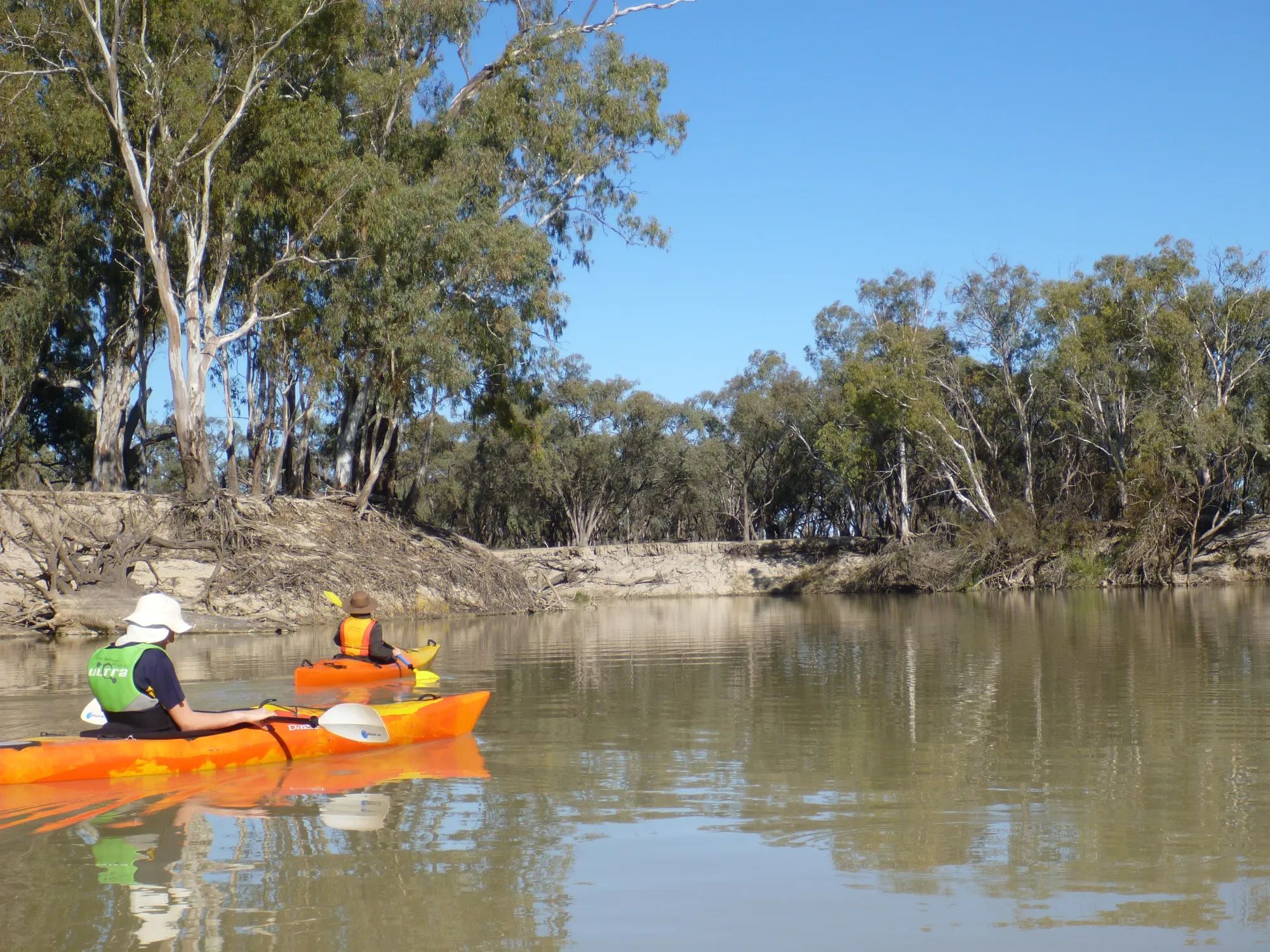
Loxton Katarapko Loop Trail
A 48 km multi-day river loop from Loxton — paddling Katarapko Creek through Murray River National Park floodplains, past the historic Stone Weir, and back downstream on the Murray. Allow 2–3 days.
- Distance
- 48 km loop
- Difficulty
- Easy – Moderate
- Trail type
- Loop
- From Adelaide
- 256 km north-east
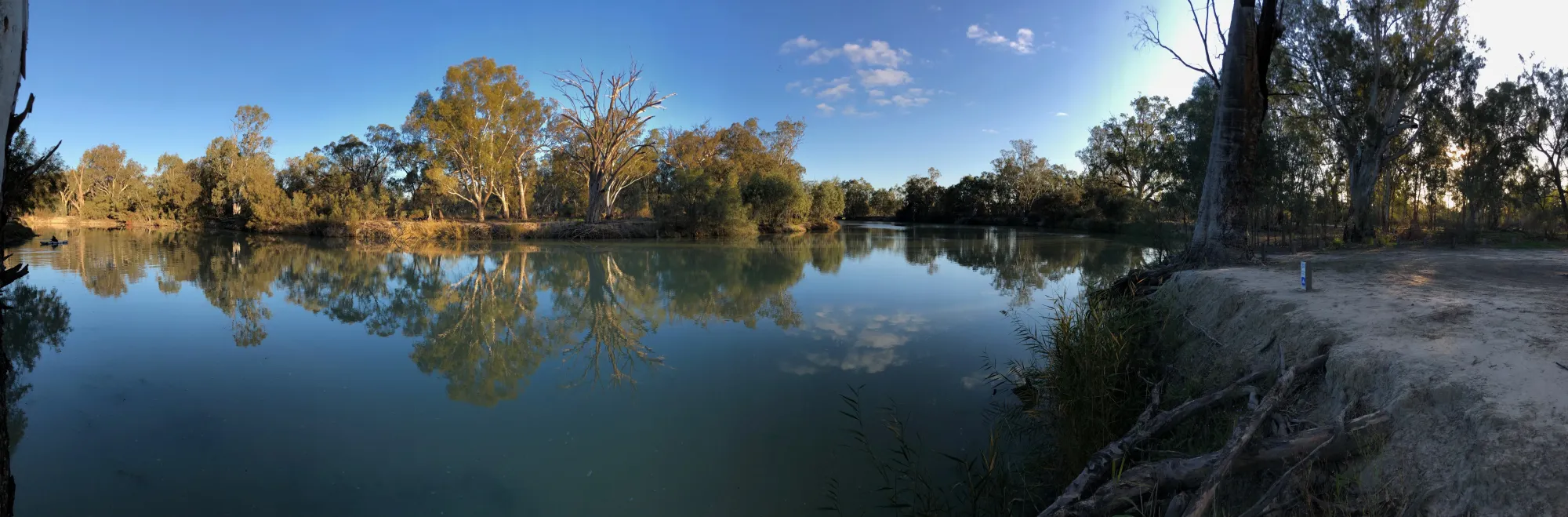
The Loxton Katarapko Loop Trail is one of the Riverland’s great multi-day paddling adventures — a 48 km circuit combining the serene backwaters of Katarapko Creek with a long downstream run on the Murray River itself. Starting and finishing at the Loxton Riverfront Reserve, the trail winds through 9,500 hectares of Murray River National Park floodplain, past environmental regulators and the famous Stone Weir, before the Murray’s gentle current carries paddlers back to town.
About This Trail
The loop begins at the Loxton Riverfront Reserve, home to the celebrated Tree of Knowledge — a magnificent old river red gum whose trunk bears flood level markers stretching back decades, with the extraordinary 1956 flood marked well above head height. From the reserve, paddlers head downstream (left) along the Murray for approximately 5.5 km to the entrance to Katarapko Creek at Point A (Milich Landing).
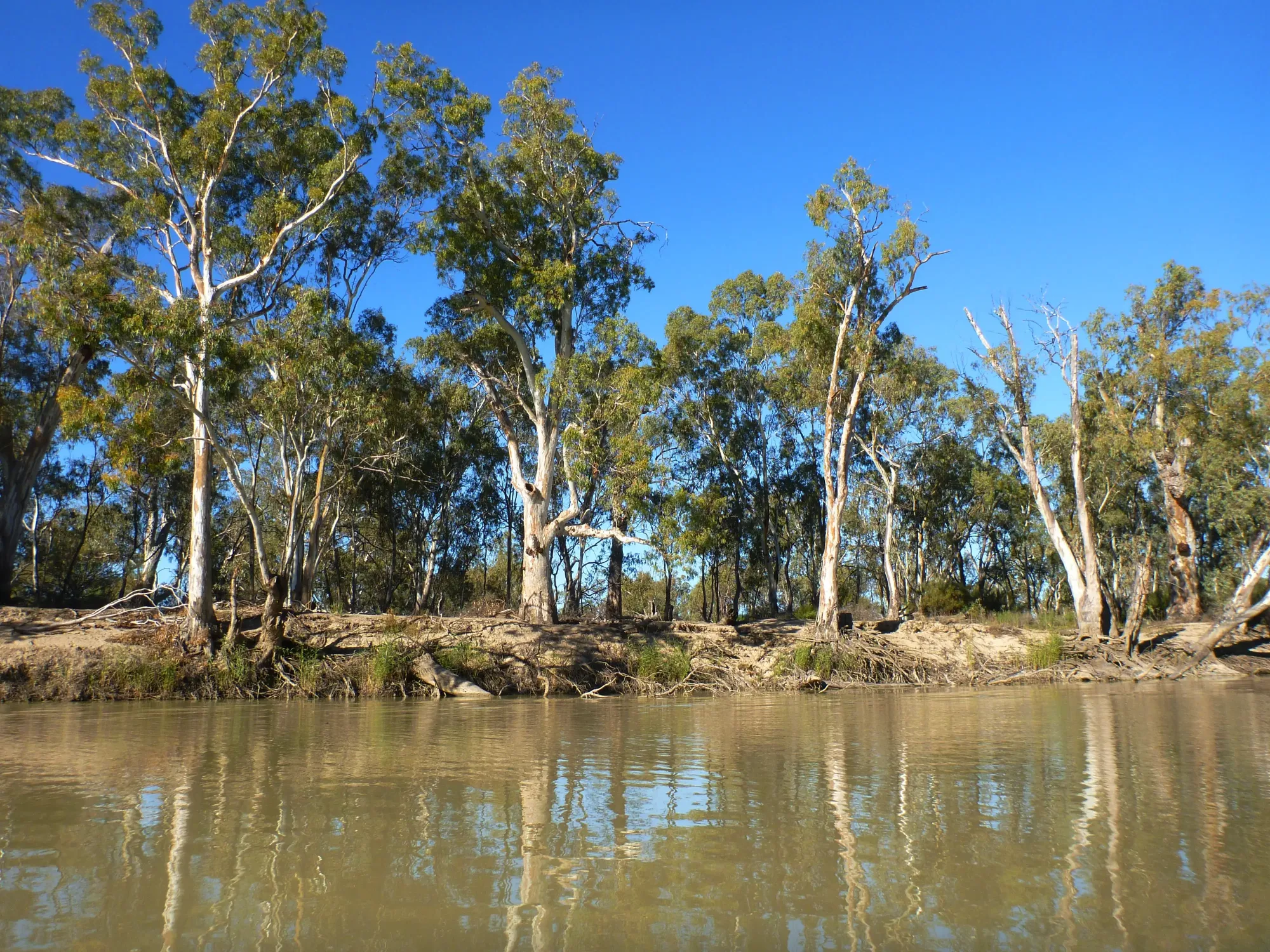
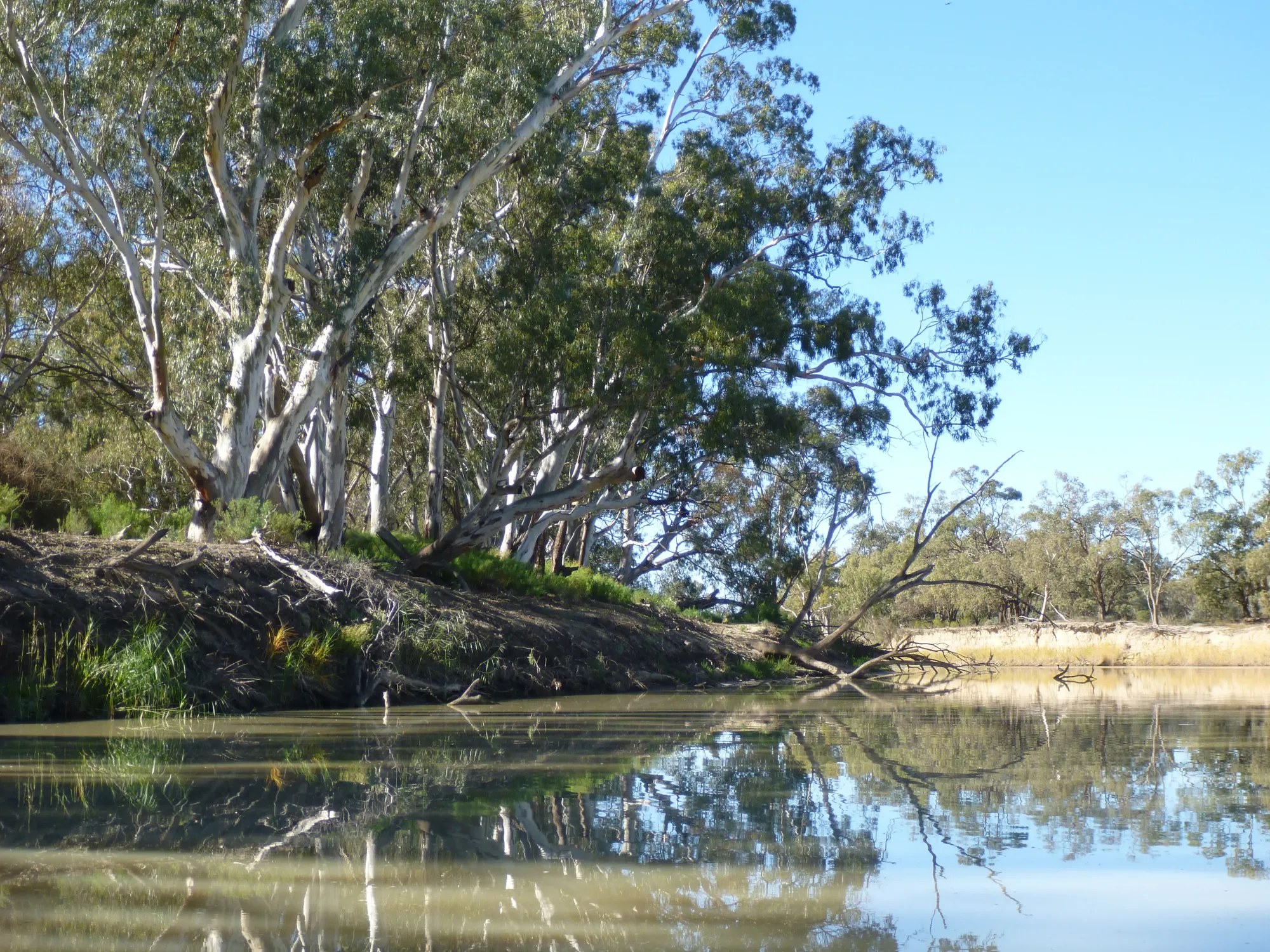
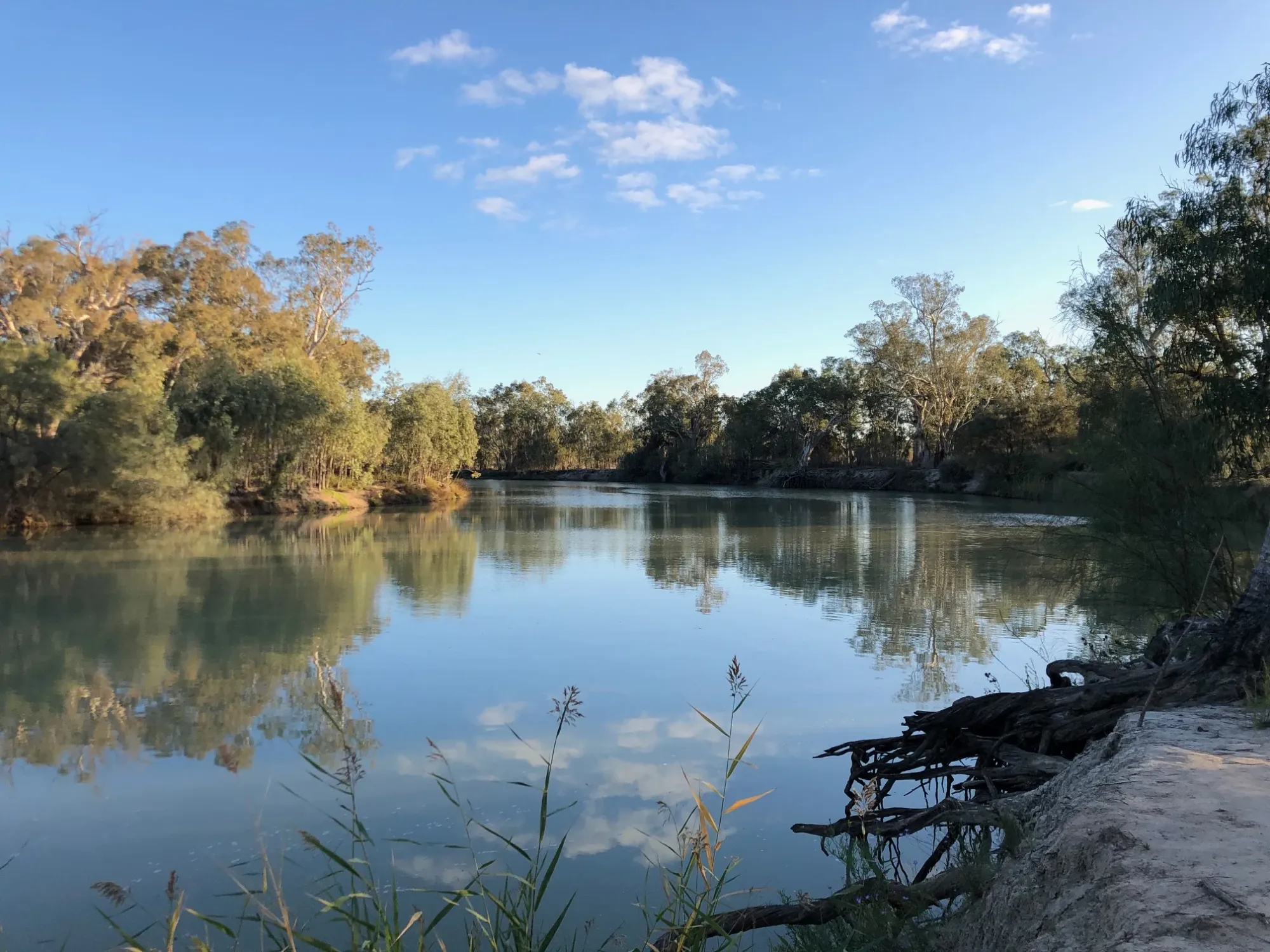
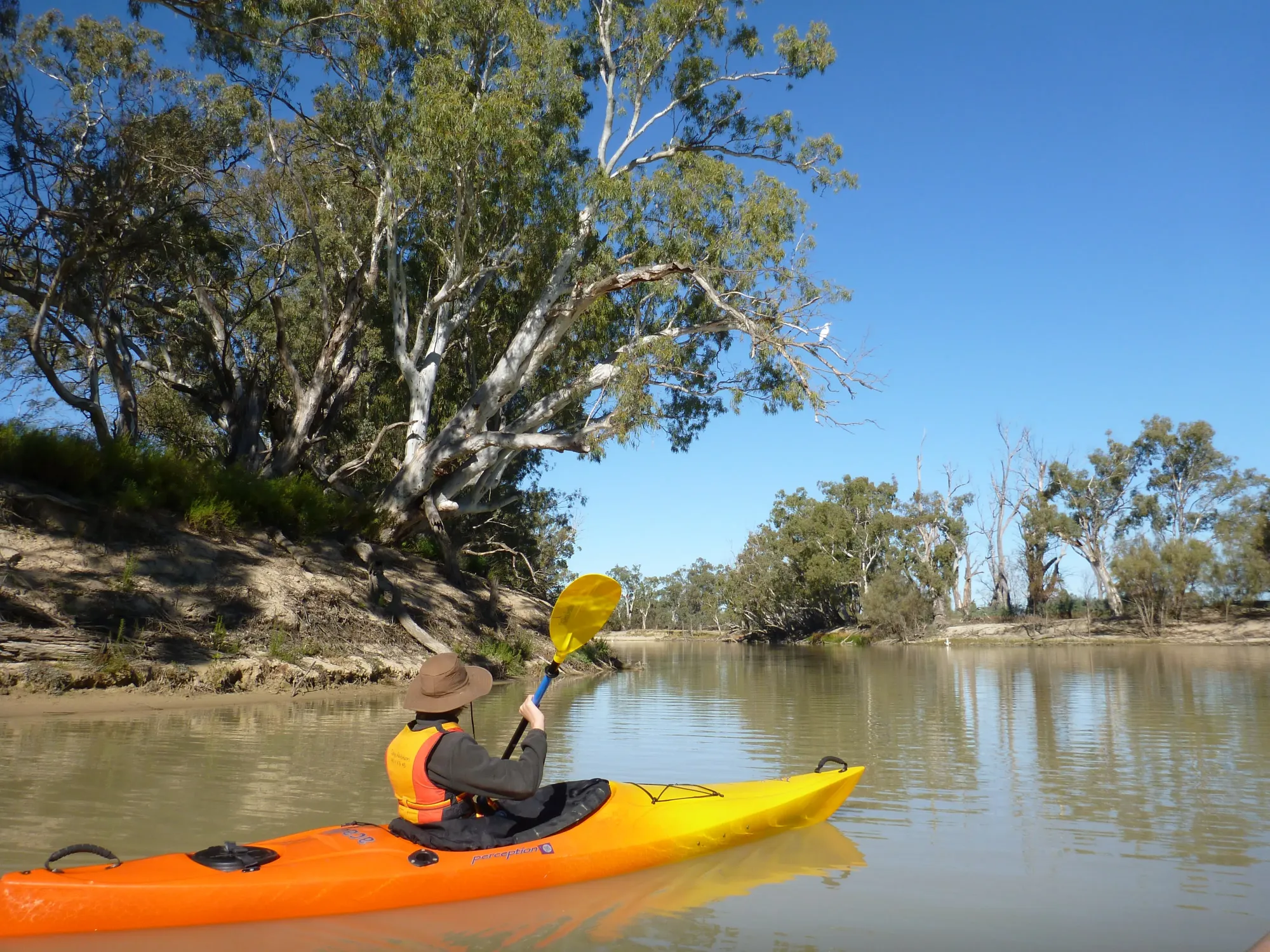
From Milich Landing, the trail follows Katarapko Creek for approximately 13.5 km through the heart of Murray River National Park — a landscape of black box, river red gum, and lignum-covered floodplains teeming with waterbirds. The creek is a significant waterway and an important habitat for native fish including golden perch and Murray cod.
At Point B (The Splash), the creek divides. Take the right-hand branch for approximately 3 km to reach the Stone Weir — the high point of the trail. Beyond the weir, the creek re-enters the Murray River at Point C, from where it is an uncomplicated 26 km downstream run back to Loxton.

Paddle SA is the governing body of paddle sport and recreation in South Australia. It leads and supports paddling in South Australia and encourages the safe exploration of our waterways.
Paddling Trails South Australia has a range of trails to suit different abilities. Know your ability.
🌐 paddlesa.au →Launch Site & Route
The trail launches from Loxton Riverfront Reserve (also known as John Hamilton Lions Memorial Park), adjacent to the Loxton Riverfront Holiday Park on Sophie Edington Drive. Secure car parking is available at the launch site. Full camping facilities including showers and toilets are available at the adjacent caravan park.
| Site | Location | Notes |
|---|---|---|
| Loxton Riverfront Reserve | Sophie Edington Drive, Loxton. GPS: 34.4474 S; 140.5486 E. Secure car parking. Toilets, picnic area, and full facilities at adjacent Loxton Riverfront Holiday Park. |
Route Description
From Loxton Riverfront Reserve, head left (downstream) along the Murray River for approximately 5.5 km to the entrance to Katarapko Creek at Milich Landing (GPS: 34.4469 S; 140.5083 E).
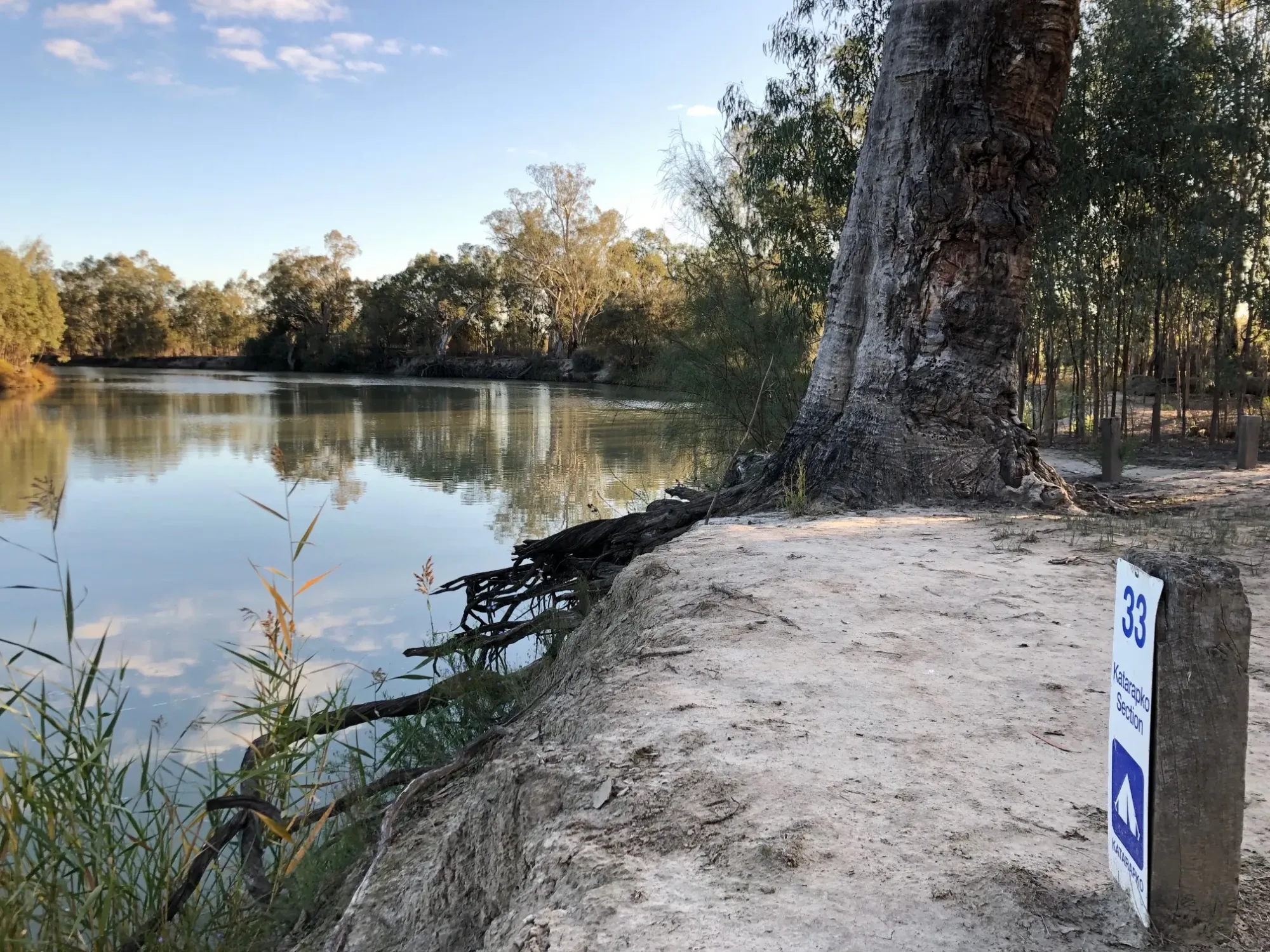
Follow Katarapko Creek upstream through Murray River National Park. The creek meanders through floodplain country alive with birdlife. Camping is available throughout this section — book sites in advance via Parks SA.
At The Splash (GPS: 34.3597 S; 140.5404 E) the creek divides. Take the right-hand branch to reach the Stone Weir. The left-hand branch (“the Splash” waterway) has a regulator and is not the correct route. Portage the Stone Weir on the left-hand side from the downstream bank. 600 m past the weir, the creek re-enters the Murray River at Point C (GPS: 34.3505 S; 140.5511 E).
From the Murray River re-entry point, a straightforward 26 km downstream run with the current brings paddlers back to the Loxton Riverfront Reserve. Excellent sandbars in this northern section provide free camping options if needed.
Wildlife & Environment
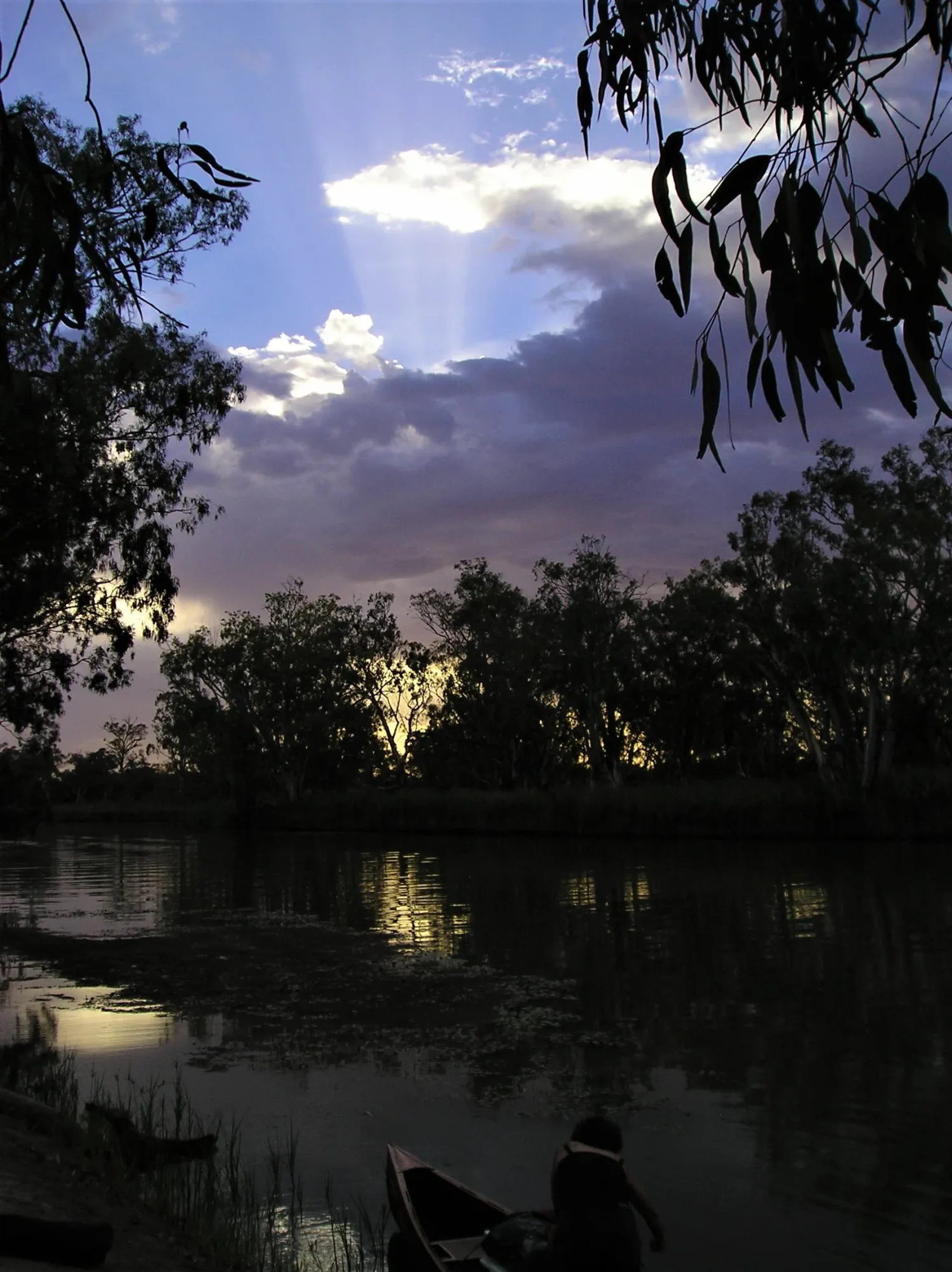
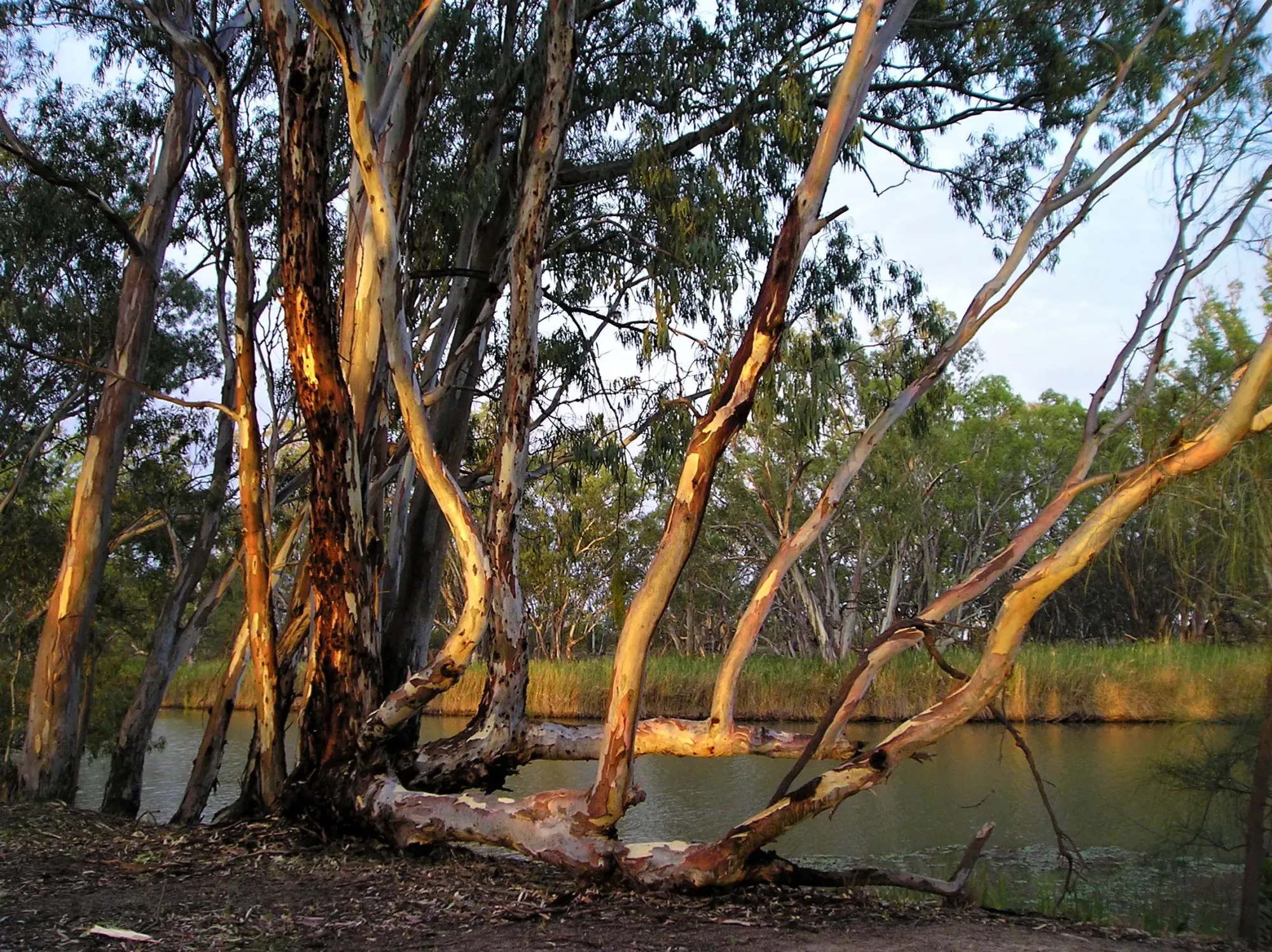
Katarapko Creek traverses over 9,500 hectares of floodplain habitat within Murray River National Park — black box, river red gum, and lignum-covered wetlands that represent some of the best-preserved floodplain environments in South Australia. The area is an important breeding ground for native wildlife, and paddling the creek at dawn or dusk offers exceptional birdwatching opportunities.
Waterbirds are abundant: Australian pelicans, spoonbills, herons, whistling kites, and an array of duck species are commonly observed from the water. Red-capped robins flit through the saltbush, and if you are fortunate you may spot a regent parrot — one of the Riverland’s most distinctive and colourful species. Kookaburras, kangaroos, lace monitors, and possums are also regularly encountered, especially at campsites.
The Ngak Indau Wetland Trail near the Lock 4 entrance to Murray River National Park is a worthwhile side-trip if you have time on shore — a 3 km circuit past a dedicated bird hide (Kevin Smith Bird Hide) through seasonal wetland habitat.
History & Heritage
The town of Loxton takes its name from William Loxton, a boundary rider at a nearby sheep station in the late 19th century. Major European settlement of the area began in 1894, and Loxton was proclaimed a town in 1907. From 1948 it became the site of the largest War Service Land Settlement Scheme in South Australia, with farmland allotted to returned WWII veterans throughout the Riverland.
At the launch point, the Tree of Knowledge — a magnificent old river red gum in John Hamilton Lions Memorial Park — stands as a living chronicle of the Murray River system. Flood level markers on its trunk record every significant flood event, with the catastrophic 1956 flood marked well above head height — a sobering reminder of the river’s power and reach. The tree is a free, family-friendly attraction and a natural starting point for any visit to the Loxton riverfront.
Paddling Trails South Australia acknowledges the Traditional Owners of the lands and waters along this trail and pays respect to Elders past, present and emerging.
Points of Interest
- Tree of Knowledge — Loxton Riverfront: A river red gum with flood level markers at the launch point. The 1956 marker sits dramatically above head height — worth a few minutes at the start of your trip.
- Milich Landing (Point A): The entry point to Katarapko Creek from the Murray, approximately 5.5 km from Loxton. A useful reference point for navigation.
- The Splash (Point B): Where Katarapko Creek divides. Take the right-hand branch toward the Stone Weir — the left branch has a regulator and is a dead end for this route.
- Stone Weir (Point C): The turnaround point of the upstream leg. Portage on the left-hand side from the downstream bank. Strong flows are common over the weir structure.
- Murray River sandbars: The 26 km return section on the Murray passes excellent sandbars suitable for free camping — a highlight of the downstream run.
- The Big Pelican, Loxton: A beloved local sculpture near the Caravan Park — a playful nod to the pelicans that frequent the Murray River, and a popular photo stop before or after your paddle.
Trail Gallery
9 photos